This is a documentation guide for nursing students and new nurses, not medical or clinical advice. Every unit does things a little differently, so your facility’s policies and your preceptor always come first.
Of everything a nurse counts, signs, or double-checks in a shift, the narcotic count is the one that gets treated most seriously, and for good reason. Controlled substances – morphine, fentanyl, hydromorphone, oxycodone, lorazepam – carry real potential for error and diversion, and the count exists so that every tablet, ampule, and vial is accounted for by two people rather than trusted to memory or a single signature.
Why it is always two nurses, never one
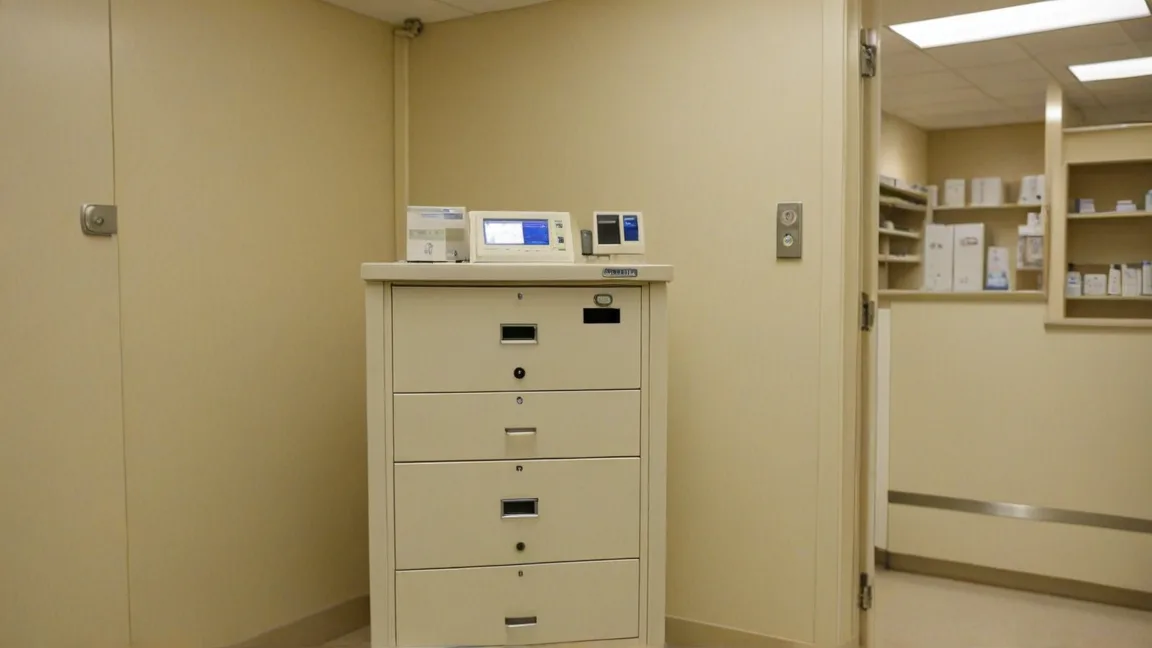
A narcotic count does not happen alone, and it does not happen rushed. The outgoing nurse and the incoming nurse open the narcotics safe or automated dispensing cabinet together, and one reads the log while the other physically counts – every blister pack, every vial, every syringe.
The reason it is always two people is not that one nurse is not trusted. It is that a single person checking their own count is checking against their own memory, and memory is exactly what this process is built not to rely on. A second set of eyes catches the count that looks right and is not.
Beginning balance, minus what was given, minus what was wasted, should equal what is left. When it does not, that is the moment everything else in this article exists to explain.
The count itself
Both nurses are present for the whole count, not just the signature at the end. The outgoing nurse reads the logged balance aloud; the incoming nurse counts the physical stock and confirms it matches before either signs anything.
Signatures go on legibly, with license numbers where the facility requires them. This is not a formality tacked onto the end – the signature is what turns “we counted it” into a record that can be traced back to two specific people if it is ever needed.

Wasting a partial dose
Controlled substances often come in doses larger than what a patient needs – giving 2 mg of morphine from a 4 mg vial is common, and the remaining 2 mg has to go somewhere accountable rather than just down the sink unwitnessed.
A second licensed nurse has to actually watch the waste happen – not sign off on it after the fact, not take the first nurse’s word for it. The waste gets documented in real time: patient initials, the amount wasted, the time, and both signatures, entered right after administration rather than saved for the end of the shift.
Waiting until the end of a busy shift to log several hours of wasting from memory is one of the more common ways this process quietly breaks down, and it is also one of the easiest habits to avoid simply by logging as it happens rather than trusting it to come back later.
When the count does not match
If the physical count does not match the logged balance, the outgoing nurse does not leave the floor. That is close to a universal rule, regardless of how minor the discrepancy looks.
The usual sequence starts with a second joint recount of the whole drawer or cabinet, since a miscount is far more common than an actual missing dose. If the recount still does not resolve it, the next step is checking the medication administration record for anything given or wasted but not logged correctly.
If the discrepancy still cannot be explained after that, it goes up – charge nurse, nursing supervisor, and usually the pharmacy director, with a formal discrepancy report filed. This is not a punitive step aimed at either nurse. It is the process working the way it is supposed to when the numbers do not add up.

What tends to go wrong
A handful of patterns account for most of the trouble this process runs into.
Counting alone, then getting a signature after the fact. The whole point of the dual count is two people present for the actual counting, not one person counting and a second person signing off on trust.
Batching the waste documentation. Wasting three doses over a shift and logging them all at the end from memory defeats the real-time record the process depends on.
Leaving the floor before a discrepancy is resolved. It is tempting at the end of a long shift, and it is exactly the situation the rule about not leaving exists for.
Treating a recount as unnecessary. Most discrepancies turn out to be counting errors, not missing medication, and a second recount catches the majority of them before anything gets escalated.
Vague documentation on the discrepancy report. A report that just says “count did not match” is far less useful later than one that notes exactly what was checked and ruled out.
Why this stays strict
None of this exists because nurses are assumed to be careless or dishonest. It exists because controlled substances are exactly the category of medication where a small, honest mistake and something more serious can look identical from the outside, and the dual count is what tells them apart. A clean count at every shift change is what keeps that question from ever needing to be asked.
Sources
U.S. Drug Enforcement Administration (DEA) – Title 21 CFR Part 1304 recordkeeping requirements
American Society of Health-System Pharmacists (ASHP) – guidelines on preventing diversion of controlled substances
Institute for Safe Medication Practices (ISMP) – independent double-check strategies
Disclaimer: This article is a documentation guide for nursing students and new nurses, for general informational purposes only. It is not medical, clinical, or exam advice, and is not affiliated with or endorsed by the NCLEX® or NCSBN®. Always follow your facility’s policies and state pharmacy board regulations.