Author: Elder K

  • SBAR Handoff for New Nurses

    SBAR Handoff for New Nurses

    SBAR Handoff for New Nurses (A Beginner’s Guide)

    As an Amazon Associate I earn from qualifying purchases. This is a documentation guide for nursing students and new nurses, not medical or clinical advice. Every unit does things a little differently, so your facility’s policies and your preceptor always come first.

    Giving report is the part of nursing that makes new nurses most self-conscious, and it is one of the few skills nobody really practices before doing it in front of an audience. SBAR is the frame most units use to keep it organized – Situation, Background, Assessment, Recommendation. Here is what each letter tends to hold, and why the order matters more than it looks.

    Why a frame helps at all

    Without a structure, report tends to come out in the order things happened to you rather than the order the listener needs. The receiving nurse does not need your morning; they need to know what they are walking into.

    SBAR fixes the order. That is most of what it does, and it is enough.

    It came out of aviation and the military before it came into healthcare, and the reason it transferred is that both fields have the same problem: someone with information has to hand it to someone who has none, quickly, often under pressure, and often across a difference in seniority that makes people hedge. A shared structure means the listener knows what is coming next, which is a surprisingly large part of being understood.

    It is also worth saying what SBAR is not. It is not a script you have to recite word for word, and it is not a substitute for your facility’s handoff policy or whatever tool your unit uses. It is a way of ordering what you were going to say anyway.

    S – Situation

    One or two sentences: who this is and why you are talking about them right now.

    Room, name, age, and the reason for admission, then the reason for this conversation. For shift report that is usually the state of the patient. For a provider call it is the thing that prompted the call, said in the first sentence rather than the fifth.

    New nurses often start too far back. The listener has not met this patient yet, but they also cannot hold a history before they know what the point is.

    A useful test: could the person you are calling write down why you called after your first two sentences? If not, the situation has not landed yet.

    For a call in the middle of the night, most experienced nurses front-load even harder. Name, room, and the problem in one breath, before anything else. The provider you woke up is orienting from zero, and the fastest way to help them is to say the thing you are worried about first.

    B – Background

    The context that makes the situation make sense. Admitting diagnosis, relevant history, allergies, code status, what has been done so far this admission.

    The judgment call here is what counts as relevant, and it takes a while to develop. The rough test most nurses use: would this change what the listener does next? A cardiac history matters for a patient with new chest pain. A childhood appendectomy usually does not.

    Background is also where the length of a handoff is usually decided, and where the difference between a shift report and a provider call is largest. A provider calling back at two in the morning wants three or four items. A nurse taking your patients for the next twelve hours wants considerably more, because they will be living with the details.

    New nurses tend to err toward completeness, and that instinct is not wrong at the start – it is easier to learn to trim than to learn to notice what you left out. Most people find the filter develops on its own within a few months, largely by watching which parts of their report people wrote down.

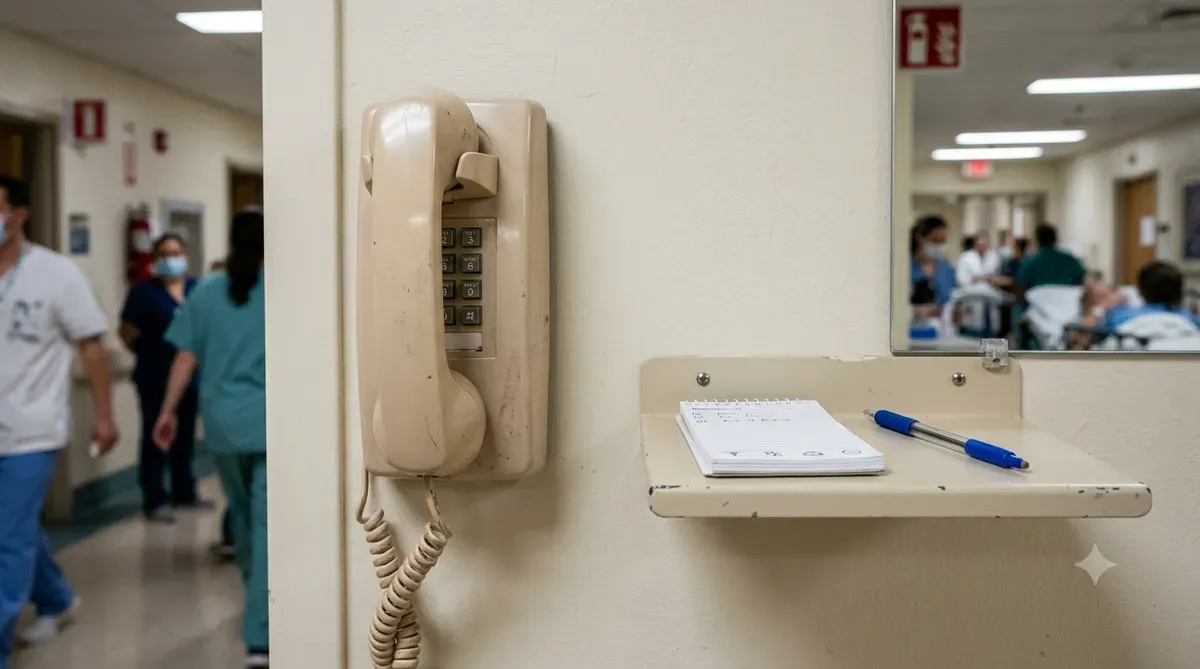
    Wall-mounted hospital telephone beside a notepad and pen

    Hospital phone with a notepad

    A – Assessment

    What you are seeing, and what you make of it.

    Vitals with trends rather than single values, your relevant findings, and pain. Then, and this is the part that feels presumptuous at first, your read on it. “I think she is more short of breath than this morning.” “Something seems off, but I cannot point to one number.”

    New nurses often leave this out, on the grounds that it is not their place to interpret. It is – within scope. You are not diagnosing. You are reporting a clinical impression, and it is often the most valuable sentence in the call, because you are the one who has been in the room.

    The phrasing that helps most people get past the hesitation is simple ownership: “what I am seeing is,” or “what worries me is.” Both are honest about the fact that this is your read, and neither claims more than that.

    It is also fine to say you cannot name it. “Nothing on the monitor has changed but she looks different to me” is a legitimate assessment statement, and experienced clinicians tend to take it seriously, because that particular sentence has a good track record.

    R – Recommendation

    What you are asking for, or what you think should happen next.

    For a provider call: “Could you come see her,” or “would you like an ABG.” For shift report: what is still pending, what is scheduled, and what to watch for.

    Ending without this is the most common way an otherwise good report falls flat. The listener has all the information and no idea what you want done with it.

    The other half of the recommendation is closing the loop. If an order comes back verbally, most units expect it read back and confirmed, and that read-back is part of the handoff rather than an add-on. If nothing is ordered and you are still uneasy, saying when you will call again – or asking what would change the plan – keeps the conversation from ending in an ambiguity you have to sit with for four hours.

    When it does not go smoothly

    Not every call goes well, and new nurses tend to assume that means they did it wrong.

    Sometimes the person on the other end is short with you. Sometimes they ask a question you cannot answer, which is worth writing down and looking up rather than guessing at. Sometimes you get a plan you do not agree with.

    Every facility has a chain of communication for that last one, and knowing what yours is – before you need it – is part of being ready to make these calls at all. Escalating is not a conflict; it is the process working. Your charge nurse is usually the first step and is almost always glad to be asked early rather than late.

    If a call goes badly, the useful move afterward is to write down what you would say differently. Most people’s reports improve in specific, fixable ways rather than gradually.

    Shift report is a different animal

    Provider calls are narrow and deep – one problem, one decision. Shift report is wide and shallow, and it has a different failure mode: running out of attention before running out of patients.

    Most nurses handle this by putting the same things in the same order every time and keeping the first pass short. Room, name, age, why they are here, code status, and the one thing that matters most for this patient. The details follow for the patients who need them.

    The other thing worth doing is naming what is unfinished plainly rather than burying it. “The two o’clock antibiotic did not get hung, it is still due” is a better sentence than a hopeful summary. Nobody minds being told; people mind finding out.

    Where the report sheet comes in

    The nurses who give calm report are usually not the ones with better recall. They are the ones whose sheet already had the pieces.

    A sheet kept current through the shift tends to map onto SBAR almost directly. The header block is your situation. History, allergies, and code status are your background. The vitals grid and your notes are your assessment. The to-do column and what is pending is your recommendation. Many report sheets include a dedicated SBAR box for exactly this reason – so that a few words jotted at the time become report later, rather than something you rebuild from memory at seven in the morning.

    It gets less uncomfortable

    Early on, report feels like a test. Later it feels like a conversation between two people who both want the same thing.

    What shortens that gap for most people is having the same structure every time and writing as they go. Neither is a talent. Both are habits.

    If it helps, the things new nurses are self-conscious about are rarely the things the listener notices. Speaking slowly is fine. Pausing to check your sheet is fine, and reads as thorough rather than unprepared. Saying “I do not know, let me find out” is fine and is a much better answer than a guess.

    What people do notice is a report that arrives in a random order, and that is the one part a structure fixes for free.

    If starting from a sheet that already has an SBAR box sounds easier than remembering to leave room for one, that is what a pre-printed report notebook is for.

    BY ELDER K · ON AMAZON
    ICU Nurse Report Sheet Notebook cover
    ICU brain sheet interior page
    ICU Nurse Report Sheet Notebook
    See the cover and what’s inside — 110 single-patient brain sheets with head-to-toe, a vitals grid, drips, and a dedicated SBAR box. 8.5×11.

    View on Amazon →

    Pocket Nurse Report Notepad

    Pocket Nurse Report Notepad

    See the design and price on Amazon →

    Sources

    AHRQ – SBAR and structured handoff communication resources

    NCBI Bookshelf – nursing handoff communication overview

    General nursing education references on shift report documentation

    Disclaimer: This article is a documentation guide for nursing students and new nurses, for general informational purposes only. It is not medical, clinical, or exam advice, and is not affiliated with or endorsed by the NCLEX® or NCSBN®. Always follow your facility’s policies and your instructors’ guidance.

  • How to Use an OR Case Log

    How to Use an OR Case Log

    How to Use an OR Case Log (A Beginner’s Guide)

    As an Amazon Associate I earn from qualifying purchases. This is a documentation guide for nursing students and new nurses, not medical or clinical advice. Every unit does things a little differently, so your facility’s policies and your preceptor always come first.

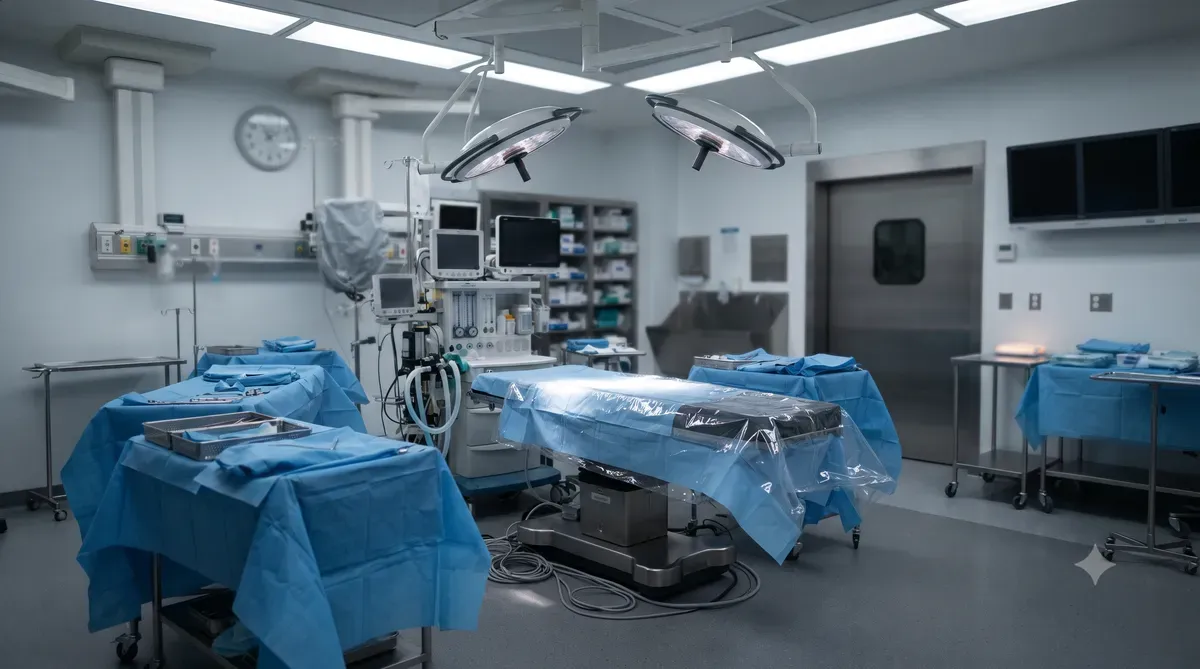
    The operating room runs on a different clock from the rest of the hospital. You are not following several patients through a shift – you are following one case at a time, closely, and then starting over. That is why perioperative nurses tend to keep a case log rather than a brain sheet: one page per case, filled in as the case moves. Here is what usually ends up on it.

    One case per page, and why that layout wins

    A multi-patient sheet makes sense where you are juggling. In the OR you are not juggling – you are documenting a single sequence in order, and the next case starts from a clean page. Giving each case its own page means the record stays in the order things happened, which is exactly the order anyone reading it later will want.

    It also means the page is still legible at the end of a long case, which is not a small thing.

    There is a second advantage that shows up weeks later. Because each case is a page, a case log becomes searchable in a way a running notebook is not. Nurses who are building toward certification, or who simply want to know how many of a given procedure they have circulated, can count rather than estimate.

    It is worth saying what the log is not. It is a working record for the nurse, not the operative record and not a legal document. The permanent documentation lives in the chart, where your facility says it does. Most departments also treat the log as protected information while it exists – which means it stays in the department and gets shredded rather than carried out. That policy is one of the first things worth asking about.

    The header, filled before the patient rolls in

    Most case logs open with the date, room, procedure, surgeon, anesthesia type, and your role – circulating or scrub. Patient position, laterality, and allergies usually sit here too.

    Laterality earns its own line for the obvious reason. Left and right belong somewhere unambiguous, written once, matching the consent and the site marking, and not reconstructed from memory later.

    Allergies get the same treatment, and latex in particular tends to be written where nobody can miss it, because it changes what comes into the room before the case starts rather than during it.

    A few other header entries earn their space on most logs. The scrub person and the anesthesia provider, because they are who you will be counting with and talking to. Any implants or specialty equipment expected, because both need to be available before the incision rather than after. And whether this is an add-on or a scheduled case, which explains a lot about how the rest of the day is going to go.

    Before the incision: the pause that gets written down

    Most departments run a formal time-out before the case begins, and it is not a nursing invention – it is a standard practice built after enough wrong-site and wrong-patient events to make the case for it plainly.

    What the log contributes is the record that it happened, when, and who was present. The time-out itself follows your facility’s protocol and the surgical safety checklist your department uses. The log is where the fact of it lives afterward.

    New circulators often find the time-out is the moment they feel most exposed, because it is the one time the whole room stops and looks at them. Most describe it settling within a few weeks, largely because the script is the same every time. Reading it from the same place on the same sheet, rather than from memory, is what makes it the same every time.

    Times are the spine of the log

    More than any other unit’s paperwork, an OR record is a timeline. The times most logs leave room for are in-room, anesthesia start, incision, close, and out-of-room.

    These are not busywork. They feed turnover statistics, billing, and any case review that happens afterward, and they are close to impossible to reconstruct honestly once the day is over. Nurses who write them as they happen rather than at the end tend to have a much easier time at the end.

    Tourniquet times belong in the same category and are less forgivable to guess at. Up time, down time, and total, with the pressure – written when it happens, because it is the one number where an estimate is not acceptable to anyone reviewing the case.

    Positioning is worth a line too. What position, what devices were used, and where padding went. Pressure injuries from long cases develop from things that were decided in the first ten minutes, and the record of what was done is easier to produce at the time than three days later.

    Sterile instrument tray with forceps and clamps on a blue surgical drape

    Sterile instrument tray on a draped back table

    Counts

    Sponge, sharp, and instrument counts are the part of the log that everyone treats seriously, and the log’s job here is narrow but important: it records what the count was, when it was performed, and who performed it with you.

    The count itself follows your facility’s policy and AORN-based practice – the sheet does not replace either. What the sheet does is give the count a written home, so the initial count, any additions during the case, and the closing counts sit in one place rather than in two people’s memories.

    Additions during the case are where a running written record earns its keep. A pack opened at minute forty is easy to remember at minute forty-five and easy to lose by minute two hundred. The log is what keeps the arithmetic honest across a long case, especially one where the team changes.

    If a count is incorrect, what happens next is entirely your facility’s protocol – the sheet is not where that is worked out. What the sheet does afterward is record that it happened, what was done, and when, because that record is the one anyone reviewing the case will look for first.

    Specimens and implants

    Two things that cause the most follow-up phone calls after a case are specimens and implants, and both are worth writing down at the moment they happen.

    For specimens, most logs note what it was, where it came from, and how it was handled. For implants, the item and its identifying information, along with where that information was recorded.

    The pattern here is the same as everywhere else in nursing documentation: the details are easy to recall for about twenty minutes and surprisingly hard to recall the next morning.

    Medications on the sterile field are a related case. Anything passed to the field gets labeled, and most logs leave room to note what was on the field and how much. It is a small entry that answers a question that comes up more often than people expect.

    Handoff, in a place that does it twice

    Perioperative handoff has a shape the rest of the hospital does not. You hand the patient to PACU at the end, and depending on the length of the case you may also hand the case itself to a relieving circulator partway through.

    The second one is the harder handoff and the one a log makes possible. A relieving nurse walking into an open case needs the counts as they stand, the times so far, what is on the field, and anything that has not gone to plan. None of that can be summarized from memory by someone who is mid-case, and all of it is on the page if the page has been kept.

    For the handoff to PACU, most of what the receiving nurse wants is already in the log – the procedure, the anesthesia, the times, drains and dressings, and anything unusual. Reading it is faster and more accurate than reciting it.

    The notes column nobody thinks about until they need it

    Most case logs have a small free space at the bottom, and experienced circulators tend to use it for things that were not routine. A positioning device that was added. A delay and why. Equipment that did not behave.

    None of that feels important while the case is running. It becomes important when someone asks about that case three weeks later, and the difference between a useful answer and a shrug is usually two lines written at the time.

    Building your own shorthand

    New circulators often try to write everything and fall behind. Most settle into abbreviations of their own within a month or two, and the log stops being a burden and starts being the thing that lets them stop holding the case in their head.

    A few failure patterns are worth naming. Writing the times at the end of the case rather than as they happen, which produces numbers that are approximately right and provably reconstructed. Leaving the notes column empty because nothing felt unusual at the time. Letting the log fall behind during the busiest part of the case, which is exactly the part someone will ask about later. And carrying the sheet out of the department, which is a policy problem rather than a personal one.

    The one part worth keeping legible to someone else is anything a relieving nurse would need in a hurry: the counts, the times, and what is on the field. Personal shorthand is fine everywhere else.

    If starting from a layout that already has the time fields, the count sections, and the specimen and implant lines sounds easier than ruling your own, that is what a pre-printed case log is for.

    BY ELDER K · ON AMAZON
    OR Nurse Case Log Notebook cover
    OR case log interior page
    OR Nurse Case Log Notebook
    See the cover and what’s inside — 110 case sheets – one case per page, with counts, times, specimens, and implants. 8.5×11.

    View on Amazon →

    OR Surgical Marking Pen

    OR Surgical Marking Pen

    See the design and price on Amazon →

    Sources

    AORN – perioperative practice guidance on surgical counts and documentation

    NCBI Bookshelf – perioperative nursing documentation overview

    General nursing education references on case-log documentation

    Disclaimer: This article is a documentation guide for nursing students and new nurses, for general informational purposes only. It is not medical, clinical, or exam advice, and is not affiliated with or endorsed by the NCLEX® or NCSBN®. Always follow your facility’s policies and your instructors’ guidance.

  • How to Use a Pediatric Report Sheet

    How to Use a Pediatric Report Sheet

    How to Use a Pediatric Report Sheet (A Beginner’s Guide)

    As an Amazon Associate I earn from qualifying purchases. This is a documentation guide for nursing students and new nurses, not medical or clinical advice. Every unit does things a little differently, so your facility’s policies and your preceptor always come first.

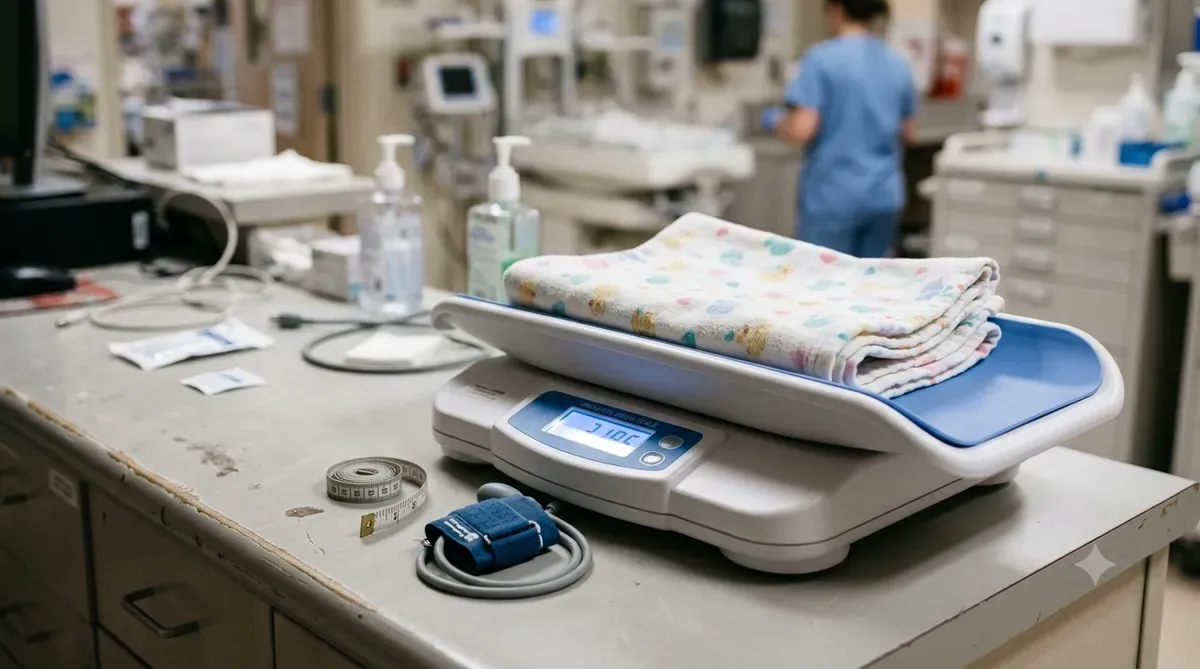
    A pediatric report sheet looks different from every other unit’s, and there is a reason for it. On an adult floor a dose is largely a dose. In peds, almost everything traces back to one number – the child’s weight – and a sheet that does not make that number obvious is working against the nurse using it. Here is what peds nurses tend to keep on theirs, and why.

    The weight goes at the top, in kilograms

    Ask any peds nurse what belongs in the first line of sight and you will hear the same answer. The weight, in kilograms, written once, where anyone can see it.

    The reason is not that the math is hard. It is that the most common weight-based error is not a math error at all – it is a units error, pounds sitting where kilograms belong. A 44-pound child is a 20-kilogram child, and if the 44 goes in the wrong place, everything downstream is calculated flawlessly from the wrong starting point.

    Writing it once at the top, and referring back to it rather than looking it up again, is the habit most peds sheets are built around.

    There is a second reason the weight sits alone at the top rather than inside the demographics block. A number that appears in one place is a number that can be corrected in one place. When the weight is copied into three sections of a sheet and the child is reweighed, two of those copies quietly become wrong, and nobody knows which one someone else read.

    Most peds sheets also leave room for when the weight was taken and how – standing scale, bed scale, stated by the parent. A stated weight from a caregiver at two in the morning and a measured weight from an hour ago are not the same kind of number, and the sheet is where that distinction survives.

    Two columns, not one, for medications

    This is the part that most general-purpose report sheets get wrong. They give one column: dose. So the nurse does the multiplication in her head, writes the total, and the working disappears.

    Peds sheets tend to split it in two – dose per kilogram, and total dose. It costs a few extra seconds per medication. What it buys is that the calculation sits on the page where a second person can look at it. Weight-based errors are usually caught by a second set of eyes, and a second set of eyes needs something to look at.

    To be clear about what a sheet is: it records what was ordered and what was given. It is not a dosing reference, and nothing on it replaces independent verification and your facility’s protocols. Any dose that comes off a sheet still gets checked against the order, and where policy requires a second nurse, that check happens regardless of what is written.

    Most peds sheets also leave room for the time each dose was given rather than only which doses are due. In a unit where several children are on weight-based antibiotics with different intervals, the times are what keep the intervals honest.

    What else a peds sheet tends to carry

    Beyond the weight and the medication table, a few entries show up on most pediatric report sheets and on very few adult ones.

    Developmental stage, not just age. A four-year-old and a nine-year-old need different explanations before the same procedure, and a sheet that notes where this child is – whether they can tell you what hurts, whether they understand what is about to happen – saves the nurse coming on from starting over.

    What comforts this child. A favorite toy, a preferred parent, whether they do better with the lights on. This is not a soft detail. A child who can be settled without medication is a better outcome than one who cannot, and the information is usually learned by one nurse and lost at shift change unless someone writes it down.

    Feeding. For infants, the type, amount, and time. For older children, what they actually ate rather than what was offered. Intake in pediatrics moves faster than it does in adults, and a few missed feeds show up sooner.

    Diaper or output counts. For the youngest patients this is one of the more useful trend lines available, and it is entirely dependent on someone recording each one at the time.

    Pediatric scale with a folded blanket and an infant blood pressure cuff

    Pediatric scale and infant cuff

    Fluids follow the same logic

    Maintenance fluids in peds are calculated per kilogram, so a box for mL/kg/hr next to the pump rate tends to be useful for the same reason the two dose columns are. It turns the number on the pump from something someone typed into something someone can trace back.

    The same logic extends to anything else the child is receiving by volume – boluses, flushes, medications given in a diluted volume. In a small patient, volumes add up in a way they do not in adults, and a running total on the sheet is easier to keep honest than one assembled from three different screens at the end of the shift.

    Note which pain scale was used

    Adults get a 0-10 scale and that is usually the end of it. Children get whichever scale fits their age and their ability to tell you – FLACC for the preverbal, Wong-Baker faces for young children, a numeric scale for older ones, CRIES or NIPS for neonates.

    Which means a bare number is close to meaningless on a peds sheet. A 6 on FLACC and a 6 on Wong-Baker are not the same claim about the same child. Most peds sheets handle this with a row of checkboxes – tick the one you used. It takes half a second and it makes every score after it interpretable by the next nurse.

    Consistency matters more than the choice itself. If the day nurse used FLACC and the night nurse switches to a numeric scale for the same child, the two scores cannot be compared, and comparison is the entire reason for scoring in the first place. Sheets that carry the scale forward from the previous shift make that continuity the default rather than something each nurse has to remember to check.

    Who is at the bedside

    One line that no adult sheet has and most peds sheets do: the caregiver in the room, and their relationship to the child.

    This is not a courtesy note. That person is a source of history, a participant in care, and practically speaking the one whose questions you will be answering all shift. Knowing whether you are talking to a parent, a grandparent, or a guardian changes the conversation before it starts.

    It also matters for the practical questions that come up at odd hours. Who can consent. Who has been told what. Whether the caregiver who was here this morning is the same one who is here now, which on a long admission is often not the case.

    Some units add a line for whether an interpreter is needed and which language. It is the kind of detail that is obvious to the nurse who learned it and invisible to the one who did not.

    What tends to go wrong

    Recording only the total dose. The most common one, and the reason the two-column layout exists. A total with no working cannot be checked.

    Pounds where kilograms belong. Rare, catastrophic, and the reason the weight sits alone at the top with its unit written out.

    A pain score with no scale. Uninterpretable by anyone who was not there.

    A stale weight. In a long admission, a weight from day one can be meaningfully wrong by day five.

    Leaving the sheet somewhere. A peds sheet carries a child’s information. Where it goes at the end of the shift is a policy question, not a preference.

    What the sheet is really doing

    The argument for writing all of this down is not documentation for its own sake. Pediatric dosing is unforgiving in a way adult dosing often is not, and the defense against that is not being smarter or more careful than everyone else. It is putting the numbers somewhere a second person can see them.

    If you would rather start from a layout that already has the weight line, the two dose columns, and the pain-scale row, that is what a pre-printed peds report notebook is for.

    BY ELDER K · ON AMAZON
    Pediatric Nurse Report Sheet Notebook cover
    Pediatric report sheet interior page
    Pediatric Nurse Report Sheet Notebook
    See the cover and what’s inside — 110 report sheets with a weight-based dosing table and a pain-scale row. 8.5×11.

    View on Amazon →

    Sources

    NCBI Bookshelf – weight-based medication safety in pediatrics

    General pediatric nursing references on age-appropriate pain assessment scales

    General nursing education references on report-sheet documentation

    Disclaimer: This article is a documentation guide for nursing students and new nurses, for general informational purposes only. It is not medical, clinical, or exam advice, and is not affiliated with or endorsed by the NCLEX® or NCSBN®. Always follow your facility’s policies and your instructors’ guidance.

  • How to Use a CNA Daily Assignment Sheet

    How to Use a CNA Daily Assignment Sheet

    How to Use a CNA Daily Assignment Sheet (A Beginner’s Guide)

    As an Amazon Associate I earn from qualifying purchases. This is a documentation guide for nursing students and new nurses, not medical or clinical advice. Every unit does things a little differently, so your facility’s policies and your preceptor always come first.

    A CNA assignment sheet has a harder job than most people realize. You may be responsible for eight, ten, twelve residents, each with their own routine, their own preferences, and their own things that must not be missed. No one holds that in their head reliably, and the CNAs who look unhurried at the end of a shift are usually the ones whose sheet was doing the remembering.

    The layout: a column per resident

    Most daily sheets are laid out as a grid – residents down one side, the recurring items across the top. That is a different shape from a nurse’s brain sheet, and it fits the work. Your day is not one deep assessment per person; it is the same handful of items repeated across a lot of people.

    Room number and name at the top of each column, and then the things that repeat.

    It is worth saying what the sheet is not. It is a working copy for your own shift, not the resident’s chart and not a legal record. The permanent documentation happens where your facility says it does. The sheet also carries resident information, which means it stays in the building – in a pocket rather than on a cart, and shredded at the end of the shift. Every facility has a policy on this and it is worth asking about on day one.

    The other thing the grid does, quietly, is make gaps visible. A row with three blanks in it at eleven in the morning is information. The same row reconstructed from memory at the end of the shift is not.

    Transfer and mobility status is the first thing to write

    Before anything else, most sheets carry how each resident moves: independent, one-assist, two-assist, mechanical lift, and which device they use.

    There is a reason this sits at the top rather than buried in the middle. It is the entry you need before you walk in the room, not after, and it is the one where working from memory on a busy hall is least forgiving. Whatever the care plan says is what goes here, unchanged.

    Two related entries usually sit beside it. Weight-bearing status, where it applies, and any device the resident uses – walker, cane, wheelchair, lift sling size. On a hall where several residents use lifts, the sling size on the sheet saves a trip and, more importantly, keeps the right equipment with the right person.

    This is also the section that changes without anyone announcing it. A resident who came back from the hospital last week may have a different transfer status than the one you learned a month ago. Sheets that get rewritten from the current care plan rather than copied from last week’s sheet are the ones that stay accurate.

    Preferences and routines, which are not a small thing

    Most assignment sheets leave a little room per resident for how this person likes their day to go, and long-term care nurses and aides tend to treat that space as one of the more valuable parts of the page.

    Someone who prefers a shower in the evening rather than the morning. Someone who does better with one aide than two. A resident who is hard of hearing on the left. Someone who will refuse care from a stranger but accept it once you have sat with them for a minute.

    None of this is clinical in the narrow sense, and all of it changes whether the day goes smoothly. It is also information that is learned by one person and lost at shift change unless it is written down. In a setting where the same residents are cared for over months and years, that accumulated knowledge is most of what makes care feel personal rather than processed.

    ADLs, marked as you go

    The core of the sheet is the ADL row: bath or shower, oral care, dressing, grooming, toileting. Most people mark these off as they finish rather than at the end of the shift, for the plain reason that by the end of the shift the details have blurred together.

    Marking as you go also makes the gaps visible while there is still time to close them. A blank box at ten in the morning is a task. A blank box at the end of the shift is a conversation.

    Refusals deserve their own mark rather than being left blank. A resident who declined a shower is a different situation from a shower that did not happen because the hall was short-staffed, and only one of those is visible if the box is simply empty. Most sheets handle it with a separate symbol, and most aides learn quickly that the distinction protects both the resident and themselves.

    Skin is the other entry that belongs in this section rather than in a note at the end. Aides see skin more often than anyone else in the building – during bathing, dressing, toileting. A mark on the sheet at the time, followed by telling the nurse, is how a small area of redness becomes something that gets looked at rather than something that gets discovered later.

    Resident room bedside table with a covered water pitcher and cup

    Resident bedside table with a water pitcher

    Intake and output

    Meal percentages, fluid intake, and output are where the sheet quietly becomes clinically useful. On their own, “ate 25 percent” and “no BM” are small notes. Across three days they are a pattern, and the nurse is the one who needs to see that pattern.

    Writing the amount and the time as you go, rather than estimating later, is what makes the numbers worth recording at all.

    Hydration in particular is a place where the sheet does real work. An older resident who drank very little across a shift is not an emergency on its own, but it is the beginning of a pattern that shows up as confusion or a urinary tract infection a few days later. Nobody sees that pattern from memory. It is visible only because three shifts each wrote down a number.

    Bowel movements get recorded for the same reason and get skipped for the same reason – it feels like a small thing at the time. It is one of the entries most reliably asked about on the third day.

    Turn and reposition times

    For residents on a turning schedule, the sheet is usually where the times live. Two hours is the common interval, and what the sheet gives you is not just a reminder but a record – the actual clock times, in order.

    This is a case where the writing serves the resident directly. Pressure injury prevention depends on the interval actually being kept, and a column of times is the only honest way to know whether it was.

    The same column tends to cover other scheduled items – toileting programs, range of motion, restorative exercises, repositioning in a chair rather than a bed. What they have in common is that they are easy to intend and easy to lose in a busy hall, and that the record is the only thing that distinguishes done from meant to.

    The line for the nurse

    Most good assignment sheets leave a space for things to pass along: a new area of redness, a resident who seems more confused than yesterday, refused meals, a complaint of pain.

    CNAs are in the room more often than anyone else on the team, which means changes are usually noticed there first. Writing the observation down – what you saw, when – and telling the nurse is how that observation becomes useful. The sheet is not where the assessment happens; it is how what you noticed gets to the person who assesses.

    Handoff

    At change of shift, the CNA coming on wants a short version: who needs two people, who is on a turn schedule, who did not eat, who had a change today. A sheet that was filled in through the day answers all four without anyone having to reconstruct.

    A few failure patterns are worth naming. Filling the sheet at the end of the shift from memory, which produces a document that is approximately true. Leaving refusals blank, which makes a choice look like a gap. Writing only what went well. And carrying the sheet home in a scrub pocket, which is the one mistake with consequences beyond the shift.

    Most aides develop their own shorthand within a few weeks, and that is fine. The one thing worth keeping legible to someone else is anything the next person needs in a hurry: transfer status, precautions, and anything that changed today.

    If starting from a grid that already has the residents, the ADL columns, and the intake and output boxes laid out sounds better than redrawing it each morning, that is what a pre-printed daily assignment notebook is for.

    BY ELDER K · ON AMAZON
    CNA Daily Assignment Notebook cover
    CNA daily assignment interior page
    CNA Daily Assignment Notebook
    See the cover and what’s inside — 110 shift sheets laid out for six residents per page – ADLs, intake, output, and vitals. 8.5×11.

    View on Amazon →

    CNA Gait Belt with Handles

    CNA Gait Belt with Handles

    See the design and price on Amazon →

    Sources

    NCBI Bookshelf – pressure injury prevention and repositioning overview

    CMS long-term care guidance on activities of daily living documentation

    General nursing assistant education references on assignment-sheet documentation

    Disclaimer: This article is a documentation guide for nursing students and new nurses, for general informational purposes only. It is not medical, clinical, or exam advice, and is not affiliated with or endorsed by the NCLEX® or NCSBN®. Always follow your facility’s policies and your instructors’ guidance.

  • What to Bring to Your First Clinical Day

    What to Bring to Your First Clinical Day

    What to Bring to Your First Clinical Day (A Realistic List)

    As an Amazon Associate I earn from qualifying purchases. This is a documentation guide for nursing students and new nurses, not medical or clinical advice. Every unit does things a little differently, so your facility’s policies and your preceptor always come first.

    Every nursing program hands out a supply list. Most of them are longer than they need to be, and the things students actually reach for on day one are not always the things printed on it. This is the honest version – which is not a substitute for your school’s list, since your program’s requirements are the ones that count.

    What tends to get used on day one

    A stethoscope. Not the most expensive one, but not the cheapest either. The very cheap ones genuinely do not transmit sound well, and a student who cannot hear something is left unsure whether it is absent or just inaudible. The mid-range classic models are what most students end up with, largely because preceptors recognize them and they last through school and into a first job.

    A penlight. Pupils, mouth, wound edges, and finding a dropped cap under a bed. Most people buy two, having lost the first.

    Bandage scissors. Tape, tubing, dressings, packaging. The blunt-tip ones are the usual recommendation.

    A watch with a second hand. Not a smartwatch – many units do not allow them, and a respiratory rate is hard to count on a phone you are not supposed to be holding. An inexpensive analog watch tends to outlast fancier options.

    Compression socks. This is the item most students skip and then buy in week three, after their first full day standing.

    Shoes you can clean. Something wipeable rather than fabric. Things land on your shoes in a hospital.

    Black pens, several. They vanish. Black rather than blue is what most facilities ask for, and it is easier to have the right one than to borrow.

    Your student ID and any required paperwork. Immunization records, a skills checklist, a badge that has not been activated yet – the administrative items are the ones that stop you at the door, and they are the least interesting to remember.

    What experienced students carry that first-years do not

    There are a few items that rarely make an official list and show up in almost every second-year’s bag.

    A small notebook that fits in a pocket. Not the big binder. Something you can pull out standing in a hallway without looking like you are settling in.

    A second pair of socks. For the day something spills.

    A phone charger or a small battery. Twelve hours is longer than most phones, and your drug reference lives on that phone.

    A pen light with a pupil gauge on the barrel, which saves carrying a separate card.

    A watch with a second hand you can read without turning your wrist. A small thing that matters when you are counting respirations while holding a wrist.

    Lip balm and a hair tie. Both trivial, both the sort of thing nobody thinks about until hour six in dry hospital air.

    Wipeable nursing shoes and compression socks beside a folded scrub top

    Nursing shoes and compression socks

    What tends to stay in the bag

    A drug guide the size of a brick. Your phone has a drug reference and it is faster, assuming your unit allows phones. Check that first – some units do not, and a small pocket guide is the fallback.

    A dozen highlighters. Most people use one.

    An expensive bag. A cheap one gets filled with the same things.

    Every optional item on the list. You can add later. Week one is not the time to find out which pouch organizer you prefer.

    Anything that jangles. Badge reels with charms, keys on a lanyard, bracelets. Quiet is easier to move in.

    Perfume or scented lotion. Hospitals are full of people who are nauseated.

    Long or elaborate nails. Most programs have a policy, and it is usually stricter than students expect.

    What nobody puts on the list

    Snacks. You may not get a proper lunch. A granola bar in a pocket is not a luxury.

    A hair tie, even if you do not think you need one.

    Cash or a card for the vending machine. Cafeterias close.

    A written list of your own questions. You will be told to ask if you have questions, and then your mind will go blank. Writing them the night before is what makes them come out.

    A plan for the drive and the parking. Student parking is often not staff parking, and it is often further away than you think. Arriving twenty minutes early on day one costs very little and removes an entire category of stress.

    Something to eat before you leave the house. Whether or not you get a break, the first few hours are the ones where being hungry shows.

    The night before

    The students who describe an easy first day tend to describe the same evening beforehand.

    Uniform out and checked against the dress code. Bag packed, not planned to be packed. Route and parking looked up. Alarm set earlier than feels necessary. Questions written down. And a look at whatever the unit is – if you know you are going to a med-surg floor, half an hour reading about the most common admissions there will not make you an expert, but it will make the words less foreign.

    What does not help is trying to review everything. You are not being tested on day one. Most instructors describe the first day as almost entirely orientation – where things are, who people are, how the unit runs.

    The thing most students end up using most

    Somewhere to write.

    Clinical days hand you information from several directions at once, and almost none of it repeats. Students who keep a page per clinical day – patient basics, skills performed and who supervised, medications given, questions for the instructor, and what they learned – tend to find that the writing is what turns a blurred day into something they can actually study from.

    That last box, the reflection one, is the one students skip and later wish they had not.

    One thing worth being careful about from the first day: what you write down should not identify anyone. Age, diagnosis, and relevant history are what you need to study from. Names, room numbers, and dates of birth are not, and a notebook that leaves the building with you is a different kind of document from the chart. Your program’s policy is the one that governs.

    What the first day actually looks like

    Most first clinical days follow a similar shape, and knowing it removes some of the dread.

    You will arrive early and stand around. There will be a tour, and you will not retain most of it. You will be introduced to a nurse who is busy, and you will spend some of the day feeling like you are in the way. You will probably do fewer hands-on tasks than you expected – vital signs, help with a bath, maybe a bed change.

    That is normal, and it is not a bad day. Day one is about learning the geography and the rhythm. The clinical work builds from week two onward, and it builds faster once you are not spending attention on where the linen is kept.

    If a ready-made layout sounds easier than reformatting a notebook every week, that is what a pre-printed clinical log is for.

    BY ELDER K · ON AMAZON
    Nursing Student Clinical Log Notebook cover
    Nursing student clinical log interior page
    Nursing Student Clinical Log Notebook
    See the cover and what’s inside — 110 clinical day sheets – skills performed, medications, care plan, questions, and reflection. 8.5×11.

    View on Amazon →

    Classic Monitoring Stethoscope

    Classic Monitoring Stethoscope

    See the design and price on Amazon →

    A word on the stethoscope, since it is the one real decision

    Of everything on the list, the stethoscope is the only item where the choice actually matters, so it is worth a paragraph.

    The problem with the cheapest ones is not that they feel flimsy. It is that they genuinely do not transmit quiet sounds well, which leaves a student unable to tell whether a murmur or a faint bowel sound is absent or simply inaudible on this particular instrument. That is a bad position to learn in, because you cannot calibrate against your own equipment.

    The problem at the other end is different: an expensive cardiology model is more instrument than a first-year needs, and it is the item most likely to walk off a counter.

    Most students land in the middle, on a well-known classic model, for reasons that are practical rather than romantic. Preceptors recognize it, replacement parts are easy to find, and it lasts into a first job rather than being replaced after graduation. Whichever you pick, put your name on it the day you get it – engraved, taped, written on the tubing. Stethoscopes disappear more than anything else students own.

    One more thing worth knowing: the ear tips matter as much as the chestpiece. If they do not seal, nothing else about the instrument helps. Angle them forward, toward your nose, rather than straight back.

    One last thing

    You will feel like you do not belong there on the first day. Nearly everyone does, including the nurses who look impossibly fast – they were where you are, and they tend to remember it better than they let on.

    Bring the scissors. Bring the snacks. Write things down.

    Sources

    General nursing education references on clinical preparation and student supply lists

    NCBI Bookshelf – clinical learning environment and student preparation overview

    Manufacturer specifications for commonly recommended student stethoscopes

    Disclaimer: This article is a documentation guide for nursing students and new nurses, for general informational purposes only. It is not medical, clinical, or exam advice, and is not affiliated with or endorsed by the NCLEX® or NCSBN®. Always follow your facility’s policies and your instructors’ guidance.

  • How to Keep a Nursing Student Clinical Log

    How to Keep a Nursing Student Clinical Log

    How to Keep a Nursing Student Clinical Log

    As an Amazon Associate I earn from qualifying purchases. This is a documentation guide for nursing students and new nurses, not medical or clinical advice. Every unit does things a little differently, so your facility’s policies and your preceptor always come first.

    Clinical days move faster than they look from the outside. You are being handed information from four directions at once – the nurse, the chart, the patient, your instructor – and almost none of it repeats. Students who write things down as they go tend to describe the same benefit, and it is not about neatness. You cannot ask a good question about something you have already forgotten.

    One page per clinical day

    The layout most students settle into is a single page per clinical day rather than a running notebook. There is a practical reason: a page has edges. When the page is the unit, you can flip back to a specific day and find it, and you have a rough sense of whether the day is documented before you leave.

    A running notebook has the opposite property. Everything blends, days lose their boundaries, and the entry you want is somewhere in the middle of forty pages of continuous writing. Students who switch to one page per day usually describe the same relief – not that they write more, but that they can find what they wrote.

    The other benefit shows up at the end of a rotation. A stack of dated pages is a record of a semester. It is what you look at when your program asks for a skills tally, and it is what you look at when you are trying to remember whether you have ever actually done the thing an interviewer just asked about.

    The patient basics, without the identifiers

    Age, admitting diagnosis, relevant history, and the general picture. What does not go on your log is anything that identifies the patient – no names, no room numbers, no dates of birth, no medical record numbers.

    This is worth being deliberate about rather than casual. Your log leaves the building with you, which means it is a different kind of document from the chart. Your school’s policy on this is the one that governs; the habit of writing “72-year-old admitted with CHF exacerbation” instead of a name is the practical version of it.

    The part students underestimate is that identifiers are not only names. A room number plus a date plus a diagnosis can identify someone as surely as a name can, particularly on a small unit. The safer habit is to write only what you would need to study from – age range, diagnosis, relevant history – and nothing that would let a stranger work out who it was.

    Where the log lives matters for the same reason. A notebook left in a car or a photo of a page on a phone are both places student documentation ends up, and both are worth thinking about before it happens rather than after.

    Skills performed, and who supervised

    Most programs want a record of skills, and most students underestimate how much they will want it later. Foley insertion, IV start, wound care, medication administration, an assessment you did on your own for the first time – with the date and the name of the nurse or instructor who supervised.

    This section becomes useful in two ways. It fills out your school’s competency requirements, and when you are asked in a job interview what you have actually done, you are reading rather than guessing.

    It is worth recording the ones that did not go well too. An IV attempt that failed, a catheter you started and your instructor finished, a dressing change you needed talked through. Students tend to skip these out of embarrassment, which is a shame, because a log that only contains successes is not much use for figuring out what to practice.

    Some students add a small mark for how independent they were – watched, assisted, did it with supervision, did it alone. Over a semester that column turns into a fairly honest picture of progress, and it is more useful than a list that treats the first attempt and the fifteenth as the same event.

    Observations, not just tasks

    The other half of a clinical day is everything you saw without doing.

    A code you stood at the edge of. A difficult conversation between a nurse and a family. A patient who declined something and how the nurse responded. A handoff that was unusually good, or unusually bad.

    Students often leave these out because they do not feel like accomplishments. They tend to be the entries that are worth the most later. Skills get repeated until they are automatic; the moment you watched someone tell a family bad news may not come around again for months, and the details fade within days.

    A line or two is enough. What happened, what you noticed, what you would want to ask someone about.

    Hospital skills lab with a training manikin arm and IV practice kit

    Skills lab practice setup

    Medications given

    A line per medication – what it was, the route, and the general reason this patient was on it.

    The value here is not the list. It is that writing “metoprolol – beta blocker – held for HR 52” puts the drug, the class, and a piece of clinical reasoning in the same sentence, which is roughly how you will need to recall it on an exam and at the bedside. Students often find the medications they wrote down are the ones they actually retained.

    A useful habit is to add the one thing you would need to check before giving it again – the parameter, the lab, the assessment. Not a full drug card, which you have on your phone, but the single item that made this medication a decision rather than a task.

    What does not belong here is a dose calculation you are working out for real use. The log is a study record. Anything given to a patient goes through the order, the protocol, and whatever verification your program and facility require.

    Your nursing diagnosis and care plan

    Most clinical logs give room for the care planning work, and this is the section students most often rush the night before it is due.

    The version that seems to help is writing a rough draft the same day, while the patient is still vivid, and cleaning it up later. A care plan reconstructed a week afterward tends to be a generic care plan. One drafted the same afternoon has the actual patient in it.

    Two or three sentences on the day of clinical is usually enough to hold it: what the actual problem seemed to be, what you would want to happen, and what you saw that supports it. The formatting your program wants can be applied later. What cannot be recovered later is the detail that made this patient specific rather than a textbook example.

    Questions for your instructor

    Leave a box for this and use it during the day.

    You will be told to ask if you have questions, and then your mind will go blank the moment someone looks at you. That is nearly universal and it is not a sign of anything. Writing the question down when it occurs to you – even half-formed, even if you answer it yourself an hour later – is the difference between asking three real questions in a clinical day and asking none.

    What you learned

    The reflection box is the one students skip most and later wish they had not.

    Two or three lines is enough. Something you saw for the first time. Something you did badly and would do differently. Something a nurse said that landed. Nursing school goes by in a blur, and this is the part of the log you will still have something to say about in two years.

    It is also, practically, where interview answers come from. “Tell me about a time something did not go as planned” is a question almost every new graduate gets, and the students who answer it well are usually the ones who wrote something down that afternoon rather than trying to summon it under pressure.

    What tends to go wrong

    Writing it three days later. The most common one. What comes back is the shape of the day, not the details worth keeping.

    Recording only what went well. Understandable, and it removes the most useful material.

    Including identifiers. Names, room numbers, dates of birth. Easy to do casually and hard to undo.

    Copying the chart. The log is your thinking about the day, not a duplicate of the record.

    Skipping the reflection box. The section students most reliably skip and most reliably regret.

    If starting from a layout that already has the skills section, the medication lines, the care plan space, and the reflection box sounds easier than reformatting a notebook every week, that is what a pre-printed clinical log is for.

    BY ELDER K · ON AMAZON
    Nursing Student Clinical Log Notebook cover
    Nursing student clinical log interior page
    Nursing Student Clinical Log Notebook
    See the cover and what’s inside — 110 clinical day sheets – skills performed, medications, care plan, questions, and reflection. 8.5×11.

    View on Amazon →

    Nursing Student Reference Cards

    Nursing Student Reference Cards

    See the design and price on Amazon →

    Sources

    NCBI Bookshelf – clinical reflection and reflective practice in nursing education

    General nursing education references on clinical journaling and competency records

    HHS – general guidance on protecting patient information in student coursework

    Disclaimer: This article is a documentation guide for nursing students and new nurses, for general informational purposes only. It is not medical, clinical, or exam advice, and is not affiliated with or endorsed by the NCLEX® or NCSBN®. Always follow your facility’s policies and your instructors’ guidance.

  • The First 90 Days as a New Nurse

    The First 90 Days as a New Nurse

    The First 90 Days as a New Nurse (What to Expect)

    As an Amazon Associate I earn from qualifying purchases. This is a documentation guide for nursing students and new nurses, not medical or clinical advice. Every unit does things a little differently, so your facility’s policies and your preceptor always come first.

    Almost everything written for new nurses is either a pep talk or a warning. What most people actually want is a sense of the shape of it – what the first three months tend to feel like, roughly when it changes, and whether what they are experiencing is normal. That is what this is. Your unit, your preceptor, and your own pace will differ, and none of this replaces the guidance you get where you work.

    Weeks 1 to 4: you are not slow, you are new

    The first month is mostly logistics wearing a clinical costume. Where the supplies are. Which pump the unit uses. Who to call at three in the morning. How this particular charting system wants things entered.

    New nurses in this stretch almost universally describe the same feeling – that everyone else is moving at double speed. What is usually happening is that everyone else has stopped spending attention on the logistics. That capacity comes back, but it comes back by month three, not week two.

    The habit most experienced nurses point to from this period is writing everything down. Not because your memory is poor, but because a first month has more novel information per hour than any other stretch of the job.

    There is also a physical adjustment nobody warns people about properly. Twelve-hour shifts, three days in a row, on your feet, on a sleep schedule that flips if you are on nights. Most new nurses describe the first month as more physically tiring than anything in school, and a fair amount of what feels like struggling to keep up is simply being tired in a way that has not been calibrated yet.

    The other thing worth knowing early is what your preceptor is actually for. Not just answering clinical questions – they are also the person who knows which provider prefers which kind of page, where the thing you cannot find is kept, and what the unwritten rules are. Those questions feel too small to ask. They are the ones that cost the most time when unasked.

    Weeks 5 to 8: the wall

    Somewhere in the second month, most new nurses hit a stretch where they feel like they are getting worse rather than better.

    This is common enough that preceptors expect it. The usual explanation is that in month one you did not know enough to see what you were missing. By month two you do. The gap you are suddenly aware of was there the whole time – you have just developed enough judgment to notice it, which is progress that feels like failure.

    Two things seem to help here. One is telling your preceptor plainly that you are in it, because they have seen it before and will calibrate. The other is not making any decisions about your career while you are in the middle of it.

    This is also where the first real mistake usually happens – a late medication, a missed order, something charted wrong. It is worth deciding in advance how you will handle it, because the deciding is harder in the moment. What experienced nurses describe almost uniformly is this: say it immediately, to the charge nurse or your preceptor, without softening it. Units are built to catch things. What they cannot catch is what nobody said.

    Almost every nurse has a version of this story. The ones who look back on it comfortably are the ones who reported it themselves.

    Hospital break room table with a coffee cup, a folded report sheet, and a pen

    Break room table with a report sheet

    Weeks 9 to 12: the small wins

    Sometime in month three, most people notice something specific: they anticipated a change before it showed up in the vitals, or they walked into a room and knew something was wrong before they could name it.

    That is not a milestone anyone celebrates, but it is the one that matters. It means the logistics have moved into the background and attention is going where it belongs.

    Report also stops being the worst part of the day around here, for most people.

    The other change is in what tires you. Month one is exhausting because everything requires attention. By month three the exhaustion is more ordinary – the work is physically demanding and emotionally heavy at times, but it stops being a constant state of alertness about your own competence.

    Somewhere in here most new nurses also get their first genuinely difficult shift emotionally rather than logistically. A patient who does not do well. A family conversation that stays with you. Nobody is prepared for that by orientation, and the people who handle it best tend to be the ones who talk about it that same week rather than filing it away.

    What orientation is and is not

    It helps to know what the structure is supposed to do.

    Orientation is not a period during which you are expected to be independent and are being generously supervised. It is the period during which you are supposed to be supported while you build speed. Those are different, and new nurses who assume the first one spend the whole time feeling behind.

    Most orientations include check-ins at set points, and those are worth preparing for rather than showing up to. Bring specifics: what you feel solid on, what you want more of, what you have not seen yet. Preceptors and educators consistently say that the new nurses who ask for particular experiences get them, and the ones who wait to be assigned get whatever comes through the door.

    If your orientation is being shortened for staffing reasons and you do not feel ready, that is a conversation to have plainly and early. It is a normal conversation. It is also much easier to have in week eight than in week twelve.

    The habits people credit afterward

    Ask the question. New nurses hesitate because they do not want to look inexperienced. You are inexperienced – that is what new means, and everyone on the unit already knows. The nurses who worry people are judging their questions are almost always being judged more kindly than they think.

    Keep the same sheet every shift. Nurses who redesign their brain sheet weekly spend attention on the sheet. Nurses who use the same layout stop noticing it, which is the point.

    Write the times. Not just the numbers – the times. It is the entry that gets skipped when things are busy and the one that turns a set of readings into a trend.

    Eat something. This sounds like filler advice until the first shift where you do not.

    Find the one nurse who explains things well. Every unit has one. They are usually not the fastest nurse or the most senior. Ask them the questions you are embarrassed about.

    Protect one day off properly. Not errands, not catching up. Most new nurses discover that three shifts and four days is only recovery if some of those days are actually recovery.

    Write down the small wins. They are easy to lose. The first time you caught something, the first family who asked for you by name, the first shift that felt ordinary. In month two, that list is worth having.

    The things nobody puts in orientation

    A few parts of the first three months come up in every conversation with new nurses and in almost no orientation packet.

    You will be tired in a way that is not about fitness. Three twelves is a different kind of load than a full-time week, and the recovery day is not optional. Most people underestimate this for about six weeks and then adjust.

    Being liked and being competent are separate problems. New nurses often spend energy worrying whether the unit likes them. Units mostly care whether you are safe, whether you ask, and whether you help. The rest sorts itself out.

    You will not remember your first hard shift as a clinical event. You will remember how it felt. Talking about it in the same week, with someone who has been there, is what most experienced nurses point to when asked what they wish they had done sooner.

    Comparing yourself to your cohort is a trap. People are placed on units with wildly different acuity, orientation lengths, and preceptor quality. Someone else feeling steady at two months may simply be on a quieter floor.

    The learning does not end at ninety days. It slows down and becomes less visible, which is a different thing. Most nurses describe a second, quieter jump somewhere around a year.

    About the timeline

    Ninety days is a convenient frame, not a deadline. Some people feel steady at two months and some at eight, and where you land has less to do with ability than with unit acuity, how orientation was structured, and plain luck in what walked through the door.

    If a ready-made layout sounds easier than redrawing your own sheet each morning while you are already carrying enough, that is what a pre-printed brain sheet notebook is for.

    BY ELDER K · ON AMAZON
    Med-Surg Nurse Brain Sheet Notebook cover
    Med-Surg brain sheet interior page
    Med-Surg Nurse Brain Sheet Notebook
    See the cover and what’s inside — 110 brain sheets laid out for three patients per page – the usual med-surg load. 8.5×11.

    View on Amazon →

    Nurse Compression Socks

    Nurse Compression Socks

    See the design and price on Amazon →

    Sources

    NCBI Bookshelf – new graduate nurse transition to practice overview

    AHRQ – nurse residency and orientation program resources

    General nursing education references on transition-to-practice support

    Disclaimer: This article is a documentation guide for nursing students and new nurses, for general informational purposes only. It is not medical, clinical, or exam advice, and is not affiliated with or endorsed by the NCLEX® or NCSBN®. Always follow your facility’s policies and your instructors’ guidance.

  • How to Use a Med-Surg Brain Sheet

    How to Use a Med-Surg Brain Sheet

    How to Use a Med-Surg Brain Sheet (A Beginner’s Guide)

    As an Amazon Associate I earn from qualifying purchases. This is a documentation guide for nursing students and new nurses, not medical or clinical advice. Every unit does things a little differently, so your facility’s policies and your preceptor always come first.

    Med-surg is where most new nurses start, and it is also where the brain sheet earns its keep. You are not watching one patient closely – you are keeping four, five, sometimes six of them straight at once, all shift, while call lights and phone calls interrupt you. Most nurses on these floors settle into some version of a one-page-per-shift sheet. Here is how they tend to use it.

    What makes a med-surg sheet different

    An ICU sheet goes deep on one patient. An ER sheet is built for turnover. A med-surg sheet has to do something harder: hold several patients at a readable glance. That is why most of them are laid out in blocks – three or so patients to a page – rather than one patient spread across a full sheet. The trade-off is space. You get less room per patient, so what you write has to be chosen more carefully.

    That constraint turns out to be the useful part. When there is room for everything, people write everything, and a sheet with everything on it is a sheet nobody can read at a glance. A block that holds eight lines forces a decision about which eight things matter for this patient today, and making that decision is most of what experienced nurses are doing when they look like they are just writing.

    It is worth saying what the sheet is not. It is a working copy for your own shift, not the chart and not a legal record. Permanent documentation happens where your facility says it does. Most units also treat the sheet as protected information while it exists – in a pocket rather than on a counter, shredded at the end of the shift rather than carried home – and that policy is worth asking about on day one.

    The header block, and why people fill it first

    The top of each patient block usually carries the room number, name, age, admitting diagnosis, code status, and allergies. Nurses tend to fill this in during report and then leave it alone. It is the part you will glance at when a provider calls and asks about “the patient in 412” – and glancing is much easier than remembering.

    Isolation status is worth a spot here too. Contact, droplet, airborne – whatever applies. It saves a walk back to the supply cart.

    A few other entries earn header space on most med-surg sheets. Mobility and fall risk, because they change how you enter the room. Diet and whether the patient is NPO, because it is the question you get asked most by patients and families. And the anticipated discharge date, which sounds like case management’s business until the morning it is today and nothing has been arranged.

    None of this takes long. Filling the header during report is maybe a minute per patient, and it is the minute people are gladdest about at two in the afternoon when a provider calls about the patient in 412.

    Writing down what actually changes

    Below the header, most sheets give a few lines per patient for the moving parts: IV site and what is running, oxygen and how much, diet, activity level, and any drains or tubes. On med-surg these do not change minute to minute the way they do in an ICU, but they change often enough that yesterday’s notes will mislead you.

    A habit that seems to help: write in something you can update, and cross out rather than erase. If a patient came off oxygen at ten in the morning, the crossed-out “2L NC” beside the new note is a small piece of history you may be glad to have at handoff.

    Med-surg has a particular version of this problem. Because the patients are more stable than in critical care, it is easy to write the picture once in the morning and treat it as settled. The changes that matter here are often slow ones – a wound that looks slightly worse, someone eating less than yesterday, a patient who was walking to the bathroom and now is not. None of those announce themselves. All of them are visible in a sheet that gets updated and invisible in one that does not.

    Time management, which is what the sheet is really for

    Ask a med-surg nurse what the hardest part of the job is and very few will say clinical knowledge. Most will say the clock.

    You have several patients, a medication pass that has to happen within a window, providers rounding at unpredictable times, a discharge that needs teaching, an admission that could arrive at any moment, and a phone that does not stop. Nobody organizes that in their head.

    The way most people handle it is to give the sheet a time column – a rough map of the shift with the fixed points marked. Medication times, scheduled treatments, anything with a window. What is left between those fixed points is the space where everything else has to fit, and seeing that space honestly is what stops the day from turning into a series of surprises.

    The related habit is writing down interruptions instead of trying to hold them. Someone stops you in the hallway to ask for a warm blanket while you are on your way to hang an antibiotic. Written on the sheet, it happens in ten minutes. Held in your head, it competes with the antibiotic and one of them loses.

    Folded nurse report sheet on a desk beside a pen and bandage scissors

    Report sheet folded beside a pen and scissors

    The to-do column is the part that saves your shift

    If there is one section experienced med-surg nurses guard, it is the running task list. Dressing change at fourteen hundred. Blood sugar before dinner. Discharge teaching for 410. Ambulate 408 twice.

    The reason this column matters more here than on other units is interruption. You will be pulled away mid-task more times than you can count, and the sheet is what tells you where you were. Nurses who cross items off as they finish tend to describe the same benefit: their eye lands on what is left, not on what is done.

    Most people end up using two marks rather than one – something for done and something else for waiting on someone. The difference matters. A dressing change you have not done yet is a task. A consult you called an hour ago is not a task, it is a thing that will fall through if you stop looking at it, and it needs to stay visible in a way that completed items do not.

    Discharges deserve their own small list. Prescriptions, instructions reviewed, follow-up appointment, transportation, equipment ordered. None of it is difficult and all of it is easy to lose when three other things are happening at once.

    Times, not just numbers

    Vital signs, blood sugars, pain scores, PRN medications – most sheets have somewhere to note these, and the entry that gets skipped under pressure is the time. It is also the entry that makes the rest useful. A pain score of 7 means one thing an hour after morphine and something else four hours after. The same goes for the last time a PRN was given, which is usually the first question the next nurse asks.

    Reassessment after a PRN is the one people most often mean to do and most often forget in the moment. Writing the time you gave it, with a small mark for the recheck, is the difference between remembering and hoping you remember. It also answers the question that comes up in any chart review – whether the response was reassessed – without anyone reconstructing the afternoon.

    Blood sugars have their own rhythm on med-surg, tied to meals rather than to the clock, and a sheet that records the value, the time, and what was given for it turns three scattered numbers into something you can actually talk about in report.

    Getting ready for handoff while the shift is still going

    The nurses who give calm report are usually not the ones with better memories. They are the ones whose sheet was already close to a report by the time report came. If you jot the one-line version of what changed as it happens – “started on IV abx at 1000, tolerating,” “refused PT, will retry PM” – handoff turns into reading rather than reconstructing.

    SBAR is the usual frame for saying it out loud: situation, background, assessment, recommendation. A sheet kept current already holds those pieces in the order you will need them.

    The recommendation is the part new nurses leave off, usually because it feels like overstepping. Within scope, it is not. You are not diagnosing – you are saying what you think should happen next, and after twelve hours you are the person best placed to say it.

    What tends to go wrong

    A few patterns come up often enough to name.

    Writing too much. Trying to transcribe the chart produces a sheet too dense to read at a glance, which was the whole point.

    Writing only in the morning. A sheet that reflects the patient as they were at eight is worse than no sheet at four, because it looks current.

    Trusting memory for the busy patient. The patient taking all your attention is the one you are most certain you will remember and most likely to be asked about later.

    Redesigning it weekly. People who keep changing the layout never build the muscle memory that makes the layout invisible.

    Leaving it somewhere. A brain sheet is a document with patient information on it. Where it goes at the end of the shift is a policy question, not a preference.

    Give it a few weeks

    The first month, most people’s sheets are a mess of arrows and margin notes, and they run out of room by noon. That is normal. Nurses who keep the same layout every shift rather than redesigning it weekly usually find that their hand starts going to the right box on its own, which is the point – the sheet is supposed to take less attention, not more.

    Most people develop shorthand within a couple of months. An arrow for a trend heading the wrong way. A circle around anything to mention in report. A corner reserved for the two things the oncoming nurse must not miss. None of it is standardized and none of it needs to be, with one exception: anything another nurse might need in a hurry if you are pulled into a room should stay legible to someone else. Allergies, code status, isolation. Your personal shorthand is fine everywhere else.

    If drawing your own boxes every morning is the part you would rather skip, that is what a pre-printed brain sheet notebook is for.

    BY ELDER K · ON AMAZON
    Med-Surg Nurse Brain Sheet Notebook cover
    Med-Surg brain sheet interior page
    Med-Surg Nurse Brain Sheet Notebook
    See the cover and what’s inside — 110 brain sheets laid out for three patients per page – the usual med-surg load. 8.5×11.

    View on Amazon →

    Nurse Clipboard with Storage

    Nurse Clipboard with Storage

    See the design and price on Amazon →

    Sources

    AHRQ – patient handoff and SBAR communication resources

    NCBI Bookshelf – nursing handoff and shift report overview

    General nursing education references on report-sheet documentation

    Disclaimer: This article is a documentation guide for nursing students and new nurses, for general informational purposes only. It is not medical, clinical, or exam advice, and is not affiliated with or endorsed by the NCLEX® or NCSBN®. Always follow your facility’s policies and your instructors’ guidance.

  • How to Use an ER Nurse Report Sheet

    How to Use an ER Nurse Report Sheet

    As an Amazon Associate I earn from qualifying purchases. This is a documentation guide for nursing students and new nurses, not medical or clinical advice. Every department does things a little differently, so your unit’s policies and your preceptor always come first.

    The emergency department moves fast, and most ER nurses lean on some kind of report sheet to keep several changing patients straight. Unlike a floor unit, patients here arrive, get worked up, and leave – sometimes within the hour. If you are still figuring out what belongs in each box, this is a walk through how experienced ED nurses tend to use theirs, section by section.

    Why the ER tends to need its own kind of sheet

    On a med-surg floor you keep the same patients all shift, so a sheet built for depth makes sense. In the ER it is usually built for turnover instead. What most ED sheets try to capture is who the patient is, why they came, what has been ordered, and where they are going next. When you are juggling four to six patients at once, a sheet that stays current is often what keeps small details from slipping.

    There is a second difference that shapes the layout. On a floor, your assignment is mostly set at the start of the shift. In the ED, it changes under you. A bay empties and refills within the hour, and the patient you spent forty minutes on is replaced by someone you know nothing about. Sheets built for the ED tend to use small repeating blocks for exactly that reason – a block is something you can finish, cross out, and start again, rather than a page you have to reorganize.

    It is also worth saying what the sheet is not. It is a working copy for your shift, not the chart and not a legal record. Most departments treat it as protected information while it exists – kept in a pocket, shredded at the end – and that policy is worth asking about on a new unit.

    The basics most nurses put at the top

    The top of each patient block usually holds the name, age, room or bay number, and time of arrival, with allergies (or “NKDA”) right beside them. Arrival time tends to earn its spot here more than on other units, simply because so many ED reassessments and decisions get tracked against the clock.

    A few other entries earn a place in the header on most ED sheets. Mode of arrival – walked in, brought by ambulance, transferred from another facility – because it frames everything that follows. Isolation status, for the same reason it belongs on any sheet: you want to know before you walk in, not after. And whoever is with the patient, since in the ED that person is often the only source of history you are going to get.

    For patients who cannot give their own history, the header is also where most nurses note where the story came from. “Per EMS” and “per daughter at bedside” are different levels of confidence, and the difference matters when someone asks you three hours later how you know.

    Chief complaint: the patient’s reason, in their words

    The chief complaint is the main problem that brought the patient in, and most nurses find it works best quoted from the patient: “chest pain 2 hours,” “twisted ankle,” “vomiting since morning.” It is tempting to tidy it into a diagnosis, but the short version usually serves the team better – it anchors the rest of the sheet, so anyone glancing at it can see why this patient is here.

    The reason experienced nurses guard the patient’s own wording is that a tidied version can quietly narrow the thinking. “Chest pain” and “pressure in my chest when I walk up the stairs” point in slightly different directions, and the second one is the version the patient actually said. Once it becomes “rule out ACS” on the sheet, the original detail is gone and nobody can get it back without asking again.

    Duration is the other half of it. “Chest pain” and “chest pain since Tuesday” are not the same presentation, and the timeframe is the part most often left off by people in a hurry.

    ESI level: what the number means

    This is the term that tends to confuse new ER nurses first. ESI stands for Emergency Severity Index, a five-level system used in most U.S. emergency departments to sort patients by urgency and by how many resources they are likely to need.

    • Level 1 – most urgent, needs life-saving action now.
    • Level 2 – high risk, should be seen very soon.
    • Level 3 – stable, but likely needs several resources such as labs, imaging, or IV medications.
    • Level 4 – likely needs one resource.
    • Level 5 – likely needs none, least urgent.

    What goes on your sheet is simply the level triage already assigned – you are recording acuity, not deciding it. Most nurses use it to order their own rounds, checking the Level 2 before the Level 5. Reading that number quickly is one of the first ER habits that clicks.

    One thing worth knowing early: the level assigned at the door is a snapshot, and patients do not always stay where they were sorted. Someone triaged as a 3 who has been waiting two hours and now looks worse is a conversation with the charge nurse, not a note to yourself. What the sheet contributes is the record that makes the conversation concrete – the level, the time it was assigned, and what you are seeing now.

    Emergency department triage room with a vital signs monitor and stretcher

    Triage room with a vital signs monitor

    Orders: labs, imaging, and medications at a glance

    The orders section works as a running checklist of what the provider has requested – bloodwork, imaging, IV fluids, medications – with each one checked off as it is completed. Because an ED plan can change in minutes, that running list is often what tells you which labs were drawn but have not resulted yet.

    Most nurses end up using two marks rather than one: something for ordered, something else for done. The gap between those two marks is where the shift actually lives. A blood culture ordered at ten and drawn at ten twenty is fine; ordered at ten and still unmarked at eleven thirty is the thing you want to catch before the physician does.

    Pending is its own category and deserves its own space. A CT that has been ordered, a patient who has gone to imaging, a consult that has been called but not answered – these are the items that fall through when the department gets busy, because they are not tasks you can complete. They are tasks you are waiting on, and the only way to keep them visible is to write them somewhere you will look again.

    Worth saying plainly: a report sheet records what was ordered and whether it is done. It is not the place to calculate doses or work out treatment decisions. For anything involving medications, your facility’s protocols and your preceptor are the sources that matter.

    Vitals and reassessment times

    ER patients get vital signs rechecked, and higher acuity generally means more often. The vitals area usually holds heart rate, blood pressure, respiratory rate, oxygen saturation, temperature, and pain score. The part new nurses most often skip is the time beside each set – and it is the part that turns a column of numbers into a trend. A trend is usually what hints that something is changing.

    Pain scores follow the same rule and get skipped for the same reason. A score recorded before a medication and again afterward, both with times, tells a story that a single number cannot. It also answers the question that comes up most often in review – whether the response to treatment was reassessed – without anyone having to reconstruct it.

    Room for a repeat set beside the first is the layout most ED nurses prefer. Two columns side by side make a change obvious at a glance, which is different from two numbers written an inch apart at different times of day.

    When the plan changes mid-shift

    The thing that separates an ED sheet from every other unit’s is how often it goes out of date.

    A patient who was going home is now being admitted. A complaint that started as abdominal pain has become something else. The bay you were about to clean is holding an admitted patient for the next four hours.

    Most nurses handle this by crossing out rather than erasing. The old disposition with a line through it and the new one beside it takes a second to write, and it means the next nurse can see that something changed rather than only what it changed to. The related habit is not writing in something you cannot amend – an ED sheet that cannot be updated gets abandoned by noon.

    Disposition: where the patient goes next

    Disposition is just the plan for where this patient ends up. The usual entries are:

    • Discharge – going home.
    • Admit – staying in the hospital (often with the unit noted, such as tele or ICU).
    • Transfer – moving to another facility.
    • Observation – staying for continued monitoring.

    Noting it early tends to pay off. If a patient is being admitted, you can start gathering report for the receiving nurse instead of scrambling once the bed is ready. It also keeps your own read on the board accurate, so you have a sense of which bays are about to open.

    Discharges have their own small checklist that tends to live in this part of the sheet: prescriptions given, instructions reviewed, follow-up arranged, ride home confirmed. None of these are complicated, and all of them are easy to lose track of when three other things are happening. Nurses who tick them off in the same order every time rarely get the call afterward asking whether the patient understood the instructions.

    Handoff: where SBAR fits

    When a patient is handed off, SBAR keeps report organized: Situation, Background, Assessment, Recommendation. A sheet that has been kept current usually already holds every piece. The situation is the chief complaint and ESI level, the background is history and allergies, the assessment is your vitals and findings, and the recommendation is the disposition and what is still pending. Nurses who fill the sheet as they go often find the handoff mostly writes itself.

    ED handoffs come in two flavors and the sheet serves both. Handing off to the oncoming ED nurse is a wide, shallow report – several patients, each in a couple of sentences, with the emphasis on what is pending. Handing off to an inpatient unit is narrow and deep – one patient, and the receiving nurse wants the whole story.

    The recommendation is the part new nurses leave off most, usually because it feels presumptuous. Within scope, it is not. You are not diagnosing; you are saying what you think should happen next, and after several hours in the room you are the person best placed to say it.

    What tends to go wrong

    A few patterns show up often enough to name.

    Writing too much. Trying to transcribe the chart produces a sheet too dense to read at a glance, which defeats the purpose.

    Letting it go stale. A sheet that reflects the department as it was two hours ago is worse than no sheet, because it looks current.

    Keeping it only in your head for the busy patient. The patient taking all your attention is the one whose details you are most sure you will remember, and the one you are most likely to be asked about later.

    Losing it. An ED sheet in a pocket is a document with patient information on it. Where it goes at the end of the shift is a policy question, not a personal preference.

    Building your own shorthand

    Most ED nurses land on their own set of marks within a month or two – a symbol for pending, another for done, an arrow for a trend heading the wrong way, a corner reserved for the two things they need to say in report.

    None of it is standardized and it does not need to be. The one thing worth keeping legible is anything another nurse might need in a hurry if you are pulled into a room: allergies, code status, the pending item that is about to matter.

    It gets easier

    The first ER shifts feel like drinking from a fire hose, and most people’s sheets look scribbled for a while. That is normal, and it is not a sign you are doing it wrong. Nurses who stick with the same layout every shift and build their own shorthand usually find that filling it in stops taking the attention they would rather spend on patients.

    If starting from a ready-made layout built for the pace of the ED sounds easier than drawing your own boxes, that is what a pre-printed report notebook is for.

    BY ELDER K · ON AMAZON
    ER Nurse Report Sheet Notebook cover
    ER report sheet interior page - triage, ESI, orders, disposition
    ER Nurse Report Sheet Notebook
    See the cover and what’s inside — 110 patient encounter sheets with triage, ESI, orders, vitals, and disposition. 8.5×11.

    View on Amazon →

    Retractable Nurse Badge Reel

    Retractable Nurse Badge Reel

    See the design and price on Amazon →

    Sources

    • AHRQ – Emergency Severity Index (ESI), a triage tool for emergency departments
    • NCBI Bookshelf – emergency nursing triage and reassessment overview
    • General nursing education references on report-sheet documentation

    Disclaimer: This article is a documentation guide for nursing students and new nurses, for general informational purposes only. It is not medical, clinical, or exam advice, and is not affiliated with or endorsed by the NCLEX® or NCSBN®. Always follow your facility’s policies and your instructors’ guidance.

  • How to Fill Out an ICU Brain Sheet

    How to Fill Out an ICU Brain Sheet

    As an Amazon Associate I earn from qualifying purchases. This is a documentation guide for nursing students and new nurses, not medical or clinical advice. Every unit does things a little differently, so your facility’s policies and your preceptor always come first.

    If you are looking at a blank ICU brain sheet with no idea where to start, that is where nearly everyone starts. A brain sheet – some units call it a report sheet, or just a nurse brain – is a one-page map of what is happening with your patient, kept where you can see it instead of in the chart. Here is what ICU nurses tend to put on theirs, box by box.

    What the sheet is actually for

    Most nurses describe it as external memory. Over twelve hours you are tracking vitals, drips, labs, lines, and a running list of small tasks, and holding all of that in your head is not a skill anyone develops – it is just a thing people stop trying to do.

    A sheet that is working lets you glance down and answer the two questions you get asked most: what is going on with this patient, and what still needs doing.

    It is worth being clear about what the sheet is not. It is not the chart, and it is not a legal record. Whatever goes on it is a working copy for your own shift, and the permanent documentation still happens where your facility says it happens. Most units also treat the sheet as protected information for as long as it exists – kept in a pocket rather than on a counter, and shredded at the end of the shift rather than carried home. Every hospital has a policy on this, and it is one of the first things worth asking about on a new unit.

    The other thing a sheet quietly does is protect you from the middle of the night. At three in the morning, after eleven hours, recall gets unreliable in ways that feel fine from the inside. Nurses who have been doing this a while tend to trust their handwriting from four hours ago more than their memory of four hours ago, and that instinct is usually right.

    The header, and why people fill it first

    The top bar is the part that gets rushed and later regretted. Date, shift, your name, room number, and code status. Allergies and admitting diagnosis usually sit here too.

    Code status tends to be placed in the first line of sight rather than tucked in with the demographics, and the reason is simple enough: it is the one thing nobody wants to be looking up in a hurry. New nurses often put it in the middle of the block, and experienced ones almost always move it to the top.

    Isolation status usually earns a place up here too. Contact, droplet, airborne, or none – written where you will see it before you walk in rather than after. The same goes for anything that changes how you approach the room at all: a patient on fall precautions, a language other than the one you speak, a hearing aid that is out.

    Weight is another entry that looks like a formality until it is not. Many ICU drips are ordered per kilogram, and a weight recorded once at the top, in kilograms, is what keeps the rest of the sheet consistent with the pumps.

    None of this takes long. The header is maybe thirty seconds of writing during report, and it is the thirty seconds people are gladdest about later.

    A head-to-toe pass, in the same order every time

    Below the header, most ICU sheets leave space for a systems review. The order matters less than the fact that it does not change:

    • Neuro – alert level, sedation, pupils, any deficits.
    • Cardiac – rhythm, blood pressure, which drips are running.
    • Respiratory – room air, nasal cannula, or vent settings.
    • GI/GU – diet or tube feeds, last bowel movement, urine output.
    • Skin and lines – wounds, dressings, and every line and drain.

    Nurses who use the same sequence every shift usually find that after a few weeks their hand goes to the next box on its own. That is the point of the consistency – it is what keeps the small items from being the ones that get skipped.

    The systems that get skipped most, when something gets skipped, are usually skin and GI. Neither tends to be the reason the patient is in the unit, so both slide down the list on a busy day. Both are also where problems build slowly and then show up all at once, which is exactly the pattern a written record catches and memory does not.

    There is a second use for this section that new nurses discover a few months in. Because you wrote the same categories at the start of the shift, you have a baseline to compare against at hour eight. “Pupils were equal at seven” is a much stronger statement than “I think they looked normal earlier,” and the only difference between the two is that one was written down.

    IV infusion pumps beside a hospital bed with a patient monitor in the background

    IV pumps and monitor at the bedside

    Vitals read better as trends

    There is usually a small grid for vital signs, and the common beginner habit is to write one number and move on.

    In critical care the direction tends to carry more information than the value. A blood pressure of 95 reads one way if it was 130 an hour ago and another way if it has been climbing from 80. Sheets with room for the last two or three readings make that visible without anyone having to reconstruct it, and that shape is often the first hint that something is changing.

    The monitor already holds all of this, which makes writing it down feel redundant on a quiet shift. The reason nurses do it anyway is that the monitor shows you a moment and the sheet shows you a shape. Scrolling back through trend data while a provider waits on the phone is a slower and more error-prone way to answer the same question.

    Intake and output belongs in the same category. On its own, an hourly urine output is a number. Across a shift it is a trend, and it is often the trend that gets quoted back to you in rounds. Nurses who total it as they go rather than at the end tend to find the totals are both faster to produce and closer to correct.

    Drips and lines do better with their own space

    ICU patients often have several drips running, and this is where a cramped sheet stops helping. The layout most nurses prefer gives each drip its own line – the medication, the current rate, and any titration goal in the orders. Lines and drains get the same treatment: where each one is and when it was placed.

    Titration goals deserve their own mention. When an order allows a range, what matters is not just the current rate but what you are titrating toward – a MAP, a sedation score, a target the provider set. Sheets that record the goal beside the rate save the conversation where two people discover halfway through the shift that they were aiming at different numbers.

    Line day counts are another small entry with an outsized payoff. Writing the date a central line or a Foley went in means that when someone asks whether it is time to reassess, the answer is on the page instead of buried in the chart.

    Worth stating plainly: the sheet records what is ordered and what is running. It is not a place to work out doses, and nothing written on it replaces the orders, your facility’s protocols, or independent verification. Any dose that comes off a sheet still gets checked against the order and, where policy requires it, with a second nurse.

    The SBAR box

    The bottom of most brain sheets leaves room for SBAR – Situation, Background, Assessment, Recommendation. It is the frame used for shift report and for calling a provider.

    Nurses who jot a few words into each part through the shift tend to describe handoff the same way: by the time report comes, it is mostly already written. The alternative is reconstructing twelve hours from memory while someone waits.

    The recommendation is the part new nurses most often leave off, usually out of a sense that it is not their call. Within scope, it is. You are not diagnosing – you are saying what you think should happen next, and you are the one who has been in the room for twelve hours. “I think she needs to be seen before morning” is a clinical impression, and it is frequently the most useful sentence in the handoff.

    What tends to go wrong with a brain sheet

    A few failure patterns come up often enough to be worth naming.

    Writing too much. New nurses often try to transcribe the chart, which produces a sheet too dense to read at a glance – which was the entire point. The sheet is a map, not a copy.

    Writing too little. The opposite failure is a sheet with three words on it that made sense at eight in the morning and mean nothing at six at night.

    Not updating it. A sheet that reflects the patient as they were at the start of report is worse than no sheet, because it looks current. Crossing out and rewriting takes seconds.

    Redesigning it every week. People who keep changing their layout never build the muscle memory that makes the layout invisible. Most experienced nurses use something close to what they used a year ago.

    Where people land, eventually, is a version they stop thinking about. That is the goal – not a beautiful sheet, an automatic one.

    A rough order that works for the first hour

    There is no correct sequence, but a common one looks like this. During report, fill the header and note anything flagged as changing. Right after report, do a quick eyes-on round of every patient before touching the paperwork again. Then go back and fill in what you actually saw rather than what you were told.

    The gap between those two is where new nurses learn the most. Report is someone else’s summary; the round is yours. When they disagree, that disagreement is usually worth a second look, and it is much easier to notice when both versions are written down.

    Making it yours

    Most nurses develop shorthand within a couple of months – arrows for trends, a symbol for tasks that are pending versus done, a corner reserved for numbers to report in rounds. None of it is standardized and none of it needs to be, as long as the next person can read the parts that matter if you are pulled away.

    The one thing worth keeping legible is anything another nurse might need in a hurry: code status, allergies, drips and rates. Your personal shorthand is fine everywhere else.

    Small habits that seem to help

    Write in something you can update, because patients change and so should the sheet. Cross tasks off as they are done, so your eye lands on what is left. And do not aim for a tidy sheet – the useful one is usually the marked-up one that got someone through the shift.

    Keep the sheet in one place, ideally the same pocket every shift, so that finding it is never a step. Note the time on anything time-sensitive rather than trusting that you will remember the gap. And when the shift falls apart – and some do – the sheet is usually the first thing to abandon and the first thing worth picking back up as soon as there is a gap, because the twenty minutes you did not write are the twenty minutes you will be asked about.

    If drawing your own boxes every morning is the part you would rather skip, that is what a pre-printed report notebook is for – the header, systems, vitals grid, and SBAR box are already laid out.

    BY ELDER K · ON AMAZON
    ICU Nurse Report Sheet Notebook cover
    ICU brain sheet interior page
    ICU Nurse Report Sheet Notebook
    See the cover and what’s inside — 110 single-patient brain sheets with head-to-toe, a vitals grid, drips, and a dedicated SBAR box. 8.5×11.

    View on Amazon →

    Littmann Classic III Stethoscope

    Littmann Classic III Stethoscope

    See the design and price on Amazon →

    Sources

    • AHRQ – patient handoff and SBAR communication resources
    • NCBI Bookshelf – head-to-toe nursing assessment overview
    • General nursing education references on report-sheet documentation

    Disclaimer: This article is a documentation guide for nursing students and new nurses, for general informational purposes only. It is not medical, clinical, or exam advice, and is not affiliated with or endorsed by the NCLEX® or NCSBN®. Always follow your facility’s policies and your instructors’ guidance.