
How to Use a CNA Daily Assignment Sheet (A Beginner’s Guide)
—
—
As an Amazon Associate I earn from qualifying purchases. This is a documentation guide for nursing students and new nurses, not medical or clinical advice. Every unit does things a little differently, so your facility’s policies and your preceptor always come first.
A CNA assignment sheet has a harder job than most people realize. You may be responsible for eight, ten, twelve residents, each with their own routine, their own preferences, and their own things that must not be missed. No one holds that in their head reliably, and the CNAs who look unhurried at the end of a shift are usually the ones whose sheet was doing the remembering.
The layout: a column per resident
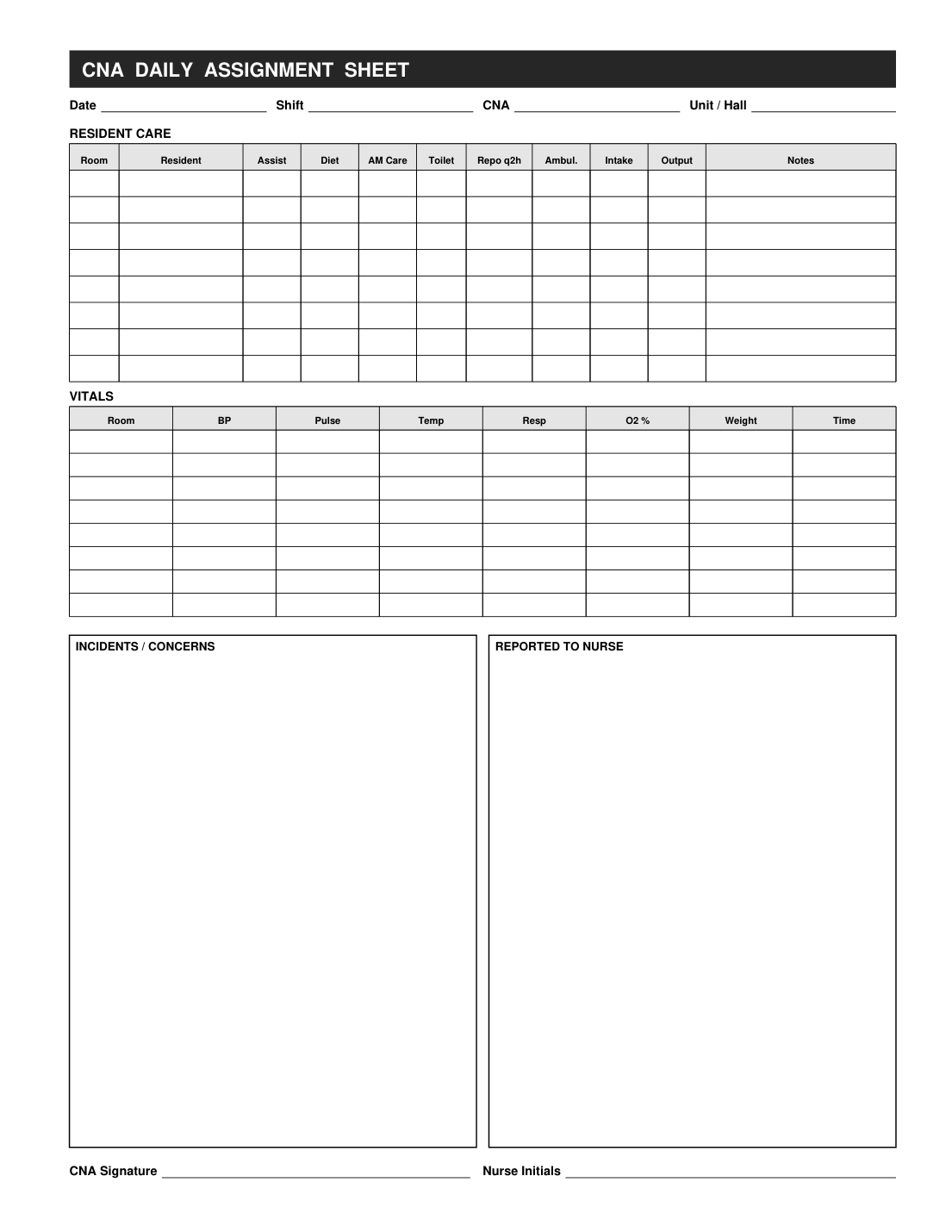
Most daily sheets are laid out as a grid – residents down one side, the recurring items across the top. That is a different shape from a nurse’s brain sheet, and it fits the work. Your day is not one deep assessment per person; it is the same handful of items repeated across a lot of people.
Room number and name at the top of each column, and then the things that repeat.
It is worth saying what the sheet is not. It is a working copy for your own shift, not the resident’s chart and not a legal record. The permanent documentation happens where your facility says it does. The sheet also carries resident information, which means it stays in the building – in a pocket rather than on a cart, and shredded at the end of the shift. Every facility has a policy on this and it is worth asking about on day one.
The other thing the grid does, quietly, is make gaps visible. A row with three blanks in it at eleven in the morning is information. The same row reconstructed from memory at the end of the shift is not.
Transfer and mobility status is the first thing to write
Before anything else, most sheets carry how each resident moves: independent, one-assist, two-assist, mechanical lift, and which device they use.
There is a reason this sits at the top rather than buried in the middle. It is the entry you need before you walk in the room, not after, and it is the one where working from memory on a busy hall is least forgiving. Whatever the care plan says is what goes here, unchanged.
Two related entries usually sit beside it. Weight-bearing status, where it applies, and any device the resident uses – walker, cane, wheelchair, lift sling size. On a hall where several residents use lifts, the sling size on the sheet saves a trip and, more importantly, keeps the right equipment with the right person.
This is also the section that changes without anyone announcing it. A resident who came back from the hospital last week may have a different transfer status than the one you learned a month ago. Sheets that get rewritten from the current care plan rather than copied from last week’s sheet are the ones that stay accurate.
Preferences and routines, which are not a small thing
Most assignment sheets leave a little room per resident for how this person likes their day to go, and long-term care nurses and aides tend to treat that space as one of the more valuable parts of the page.
Someone who prefers a shower in the evening rather than the morning. Someone who does better with one aide than two. A resident who is hard of hearing on the left. Someone who will refuse care from a stranger but accept it once you have sat with them for a minute.
None of this is clinical in the narrow sense, and all of it changes whether the day goes smoothly. It is also information that is learned by one person and lost at shift change unless it is written down. In a setting where the same residents are cared for over months and years, that accumulated knowledge is most of what makes care feel personal rather than processed.
ADLs, marked as you go
The core of the sheet is the ADL row: bath or shower, oral care, dressing, grooming, toileting. Most people mark these off as they finish rather than at the end of the shift, for the plain reason that by the end of the shift the details have blurred together.
Marking as you go also makes the gaps visible while there is still time to close them. A blank box at ten in the morning is a task. A blank box at the end of the shift is a conversation.
Refusals deserve their own mark rather than being left blank. A resident who declined a shower is a different situation from a shower that did not happen because the hall was short-staffed, and only one of those is visible if the box is simply empty. Most sheets handle it with a separate symbol, and most aides learn quickly that the distinction protects both the resident and themselves.
Skin is the other entry that belongs in this section rather than in a note at the end. Aides see skin more often than anyone else in the building – during bathing, dressing, toileting. A mark on the sheet at the time, followed by telling the nurse, is how a small area of redness becomes something that gets looked at rather than something that gets discovered later.
Intake and output
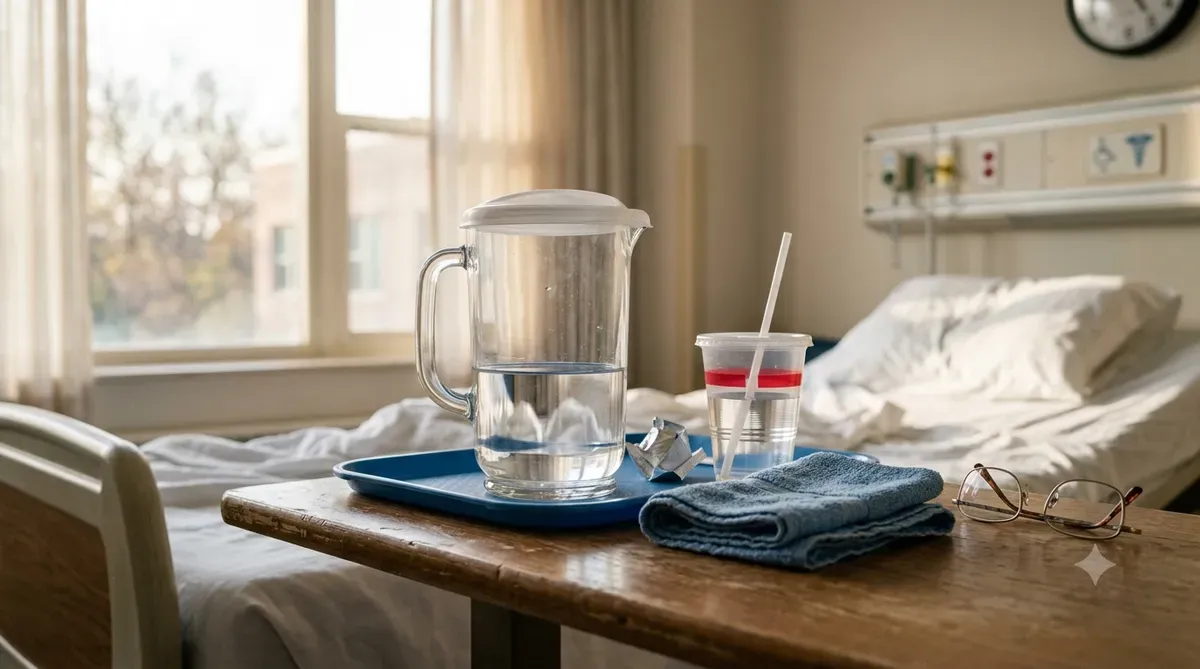
Meal percentages, fluid intake, and output are where the sheet quietly becomes clinically useful. On their own, “ate 25 percent” and “no BM” are small notes. Across three days they are a pattern, and the nurse is the one who needs to see that pattern.
Writing the amount and the time as you go, rather than estimating later, is what makes the numbers worth recording at all.
Hydration in particular is a place where the sheet does real work. An older resident who drank very little across a shift is not an emergency on its own, but it is the beginning of a pattern that shows up as confusion or a urinary tract infection a few days later. Nobody sees that pattern from memory. It is visible only because three shifts each wrote down a number.
Bowel movements get recorded for the same reason and get skipped for the same reason – it feels like a small thing at the time. It is one of the entries most reliably asked about on the third day.
Turn and reposition times
For residents on a turning schedule, the sheet is usually where the times live. Two hours is the common interval, and what the sheet gives you is not just a reminder but a record – the actual clock times, in order.
This is a case where the writing serves the resident directly. Pressure injury prevention depends on the interval actually being kept, and a column of times is the only honest way to know whether it was.
The same column tends to cover other scheduled items – toileting programs, range of motion, restorative exercises, repositioning in a chair rather than a bed. What they have in common is that they are easy to intend and easy to lose in a busy hall, and that the record is the only thing that distinguishes done from meant to.
The line for the nurse
Most good assignment sheets leave a space for things to pass along: a new area of redness, a resident who seems more confused than yesterday, refused meals, a complaint of pain.
CNAs are in the room more often than anyone else on the team, which means changes are usually noticed there first. Writing the observation down – what you saw, when – and telling the nurse is how that observation becomes useful. The sheet is not where the assessment happens; it is how what you noticed gets to the person who assesses.
Handoff
At change of shift, the CNA coming on wants a short version: who needs two people, who is on a turn schedule, who did not eat, who had a change today. A sheet that was filled in through the day answers all four without anyone having to reconstruct.
A few failure patterns are worth naming. Filling the sheet at the end of the shift from memory, which produces a document that is approximately true. Leaving refusals blank, which makes a choice look like a gap. Writing only what went well. And carrying the sheet home in a scrub pocket, which is the one mistake with consequences beyond the shift.
Most aides develop their own shorthand within a few weeks, and that is fine. The one thing worth keeping legible to someone else is anything the next person needs in a hurry: transfer status, precautions, and anything that changed today.
If starting from a grid that already has the residents, the ADL columns, and the intake and output boxes laid out sounds better than redrawing it each morning, that is what a pre-printed daily assignment notebook is for.
Sources
NCBI Bookshelf – pressure injury prevention and repositioning overview
CMS long-term care guidance on activities of daily living documentation
General nursing assistant education references on assignment-sheet documentation
Disclaimer: This article is a documentation guide for nursing students and new nurses, for general informational purposes only. It is not medical, clinical, or exam advice, and is not affiliated with or endorsed by the NCLEX® or NCSBN®. Always follow your facility’s policies and your instructors’ guidance.