How to Use an OR Case Log (A Beginner’s Guide)
—
—
As an Amazon Associate I earn from qualifying purchases. This is a documentation guide for nursing students and new nurses, not medical or clinical advice. Every unit does things a little differently, so your facility’s policies and your preceptor always come first.
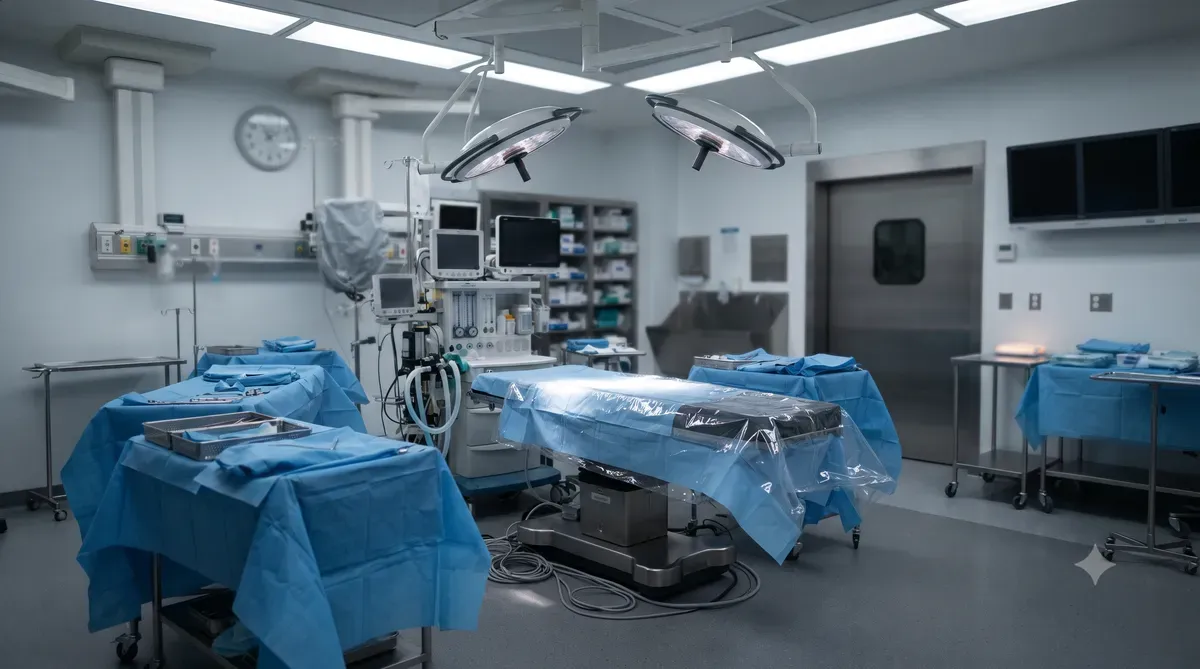
The operating room runs on a different clock from the rest of the hospital. You are not following several patients through a shift – you are following one case at a time, closely, and then starting over. That is why perioperative nurses tend to keep a case log rather than a brain sheet: one page per case, filled in as the case moves. Here is what usually ends up on it.
One case per page, and why that layout wins
A multi-patient sheet makes sense where you are juggling. In the OR you are not juggling – you are documenting a single sequence in order, and the next case starts from a clean page. Giving each case its own page means the record stays in the order things happened, which is exactly the order anyone reading it later will want.
It also means the page is still legible at the end of a long case, which is not a small thing.
There is a second advantage that shows up weeks later. Because each case is a page, a case log becomes searchable in a way a running notebook is not. Nurses who are building toward certification, or who simply want to know how many of a given procedure they have circulated, can count rather than estimate.
It is worth saying what the log is not. It is a working record for the nurse, not the operative record and not a legal document. The permanent documentation lives in the chart, where your facility says it does. Most departments also treat the log as protected information while it exists – which means it stays in the department and gets shredded rather than carried out. That policy is one of the first things worth asking about.
The header, filled before the patient rolls in
Most case logs open with the date, room, procedure, surgeon, anesthesia type, and your role – circulating or scrub. Patient position, laterality, and allergies usually sit here too.
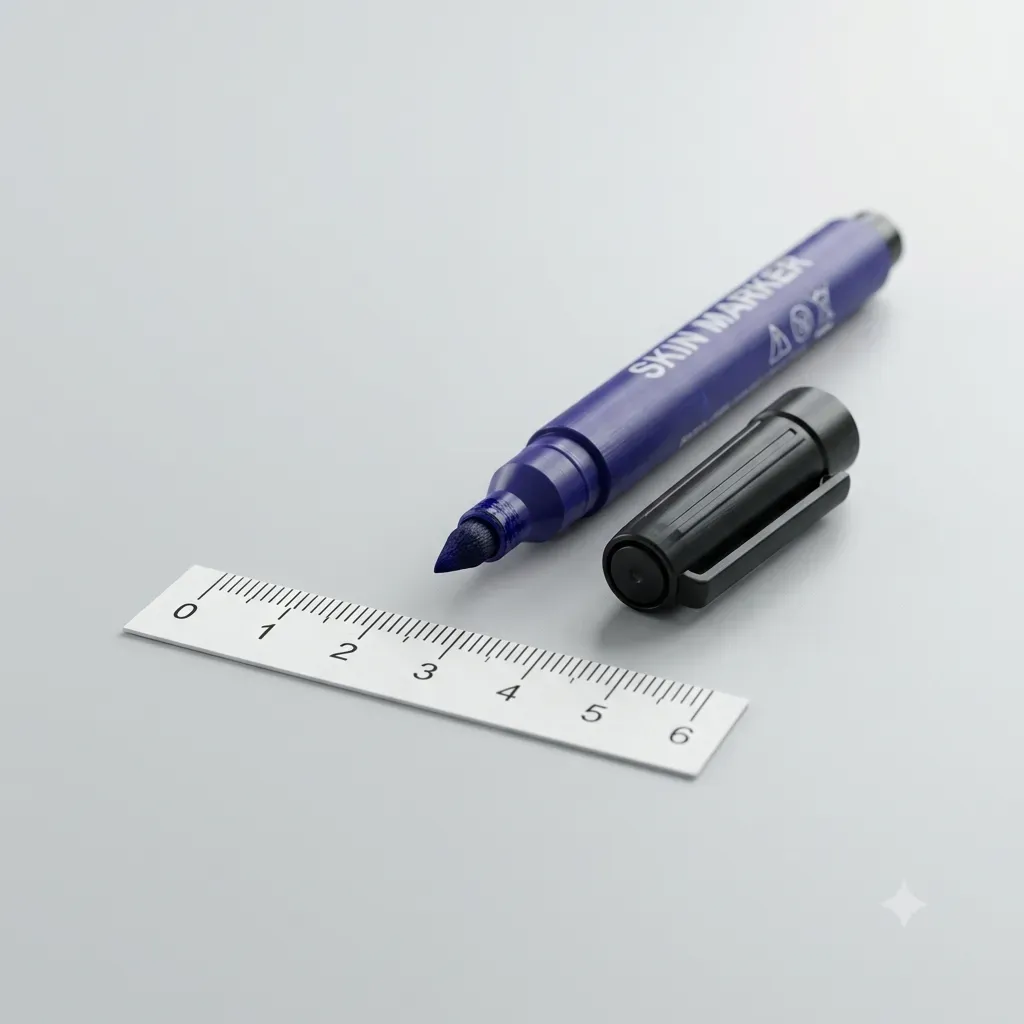
Laterality earns its own line for the obvious reason. Left and right belong somewhere unambiguous, written once, matching the consent and the site marking, and not reconstructed from memory later.
Allergies get the same treatment, and latex in particular tends to be written where nobody can miss it, because it changes what comes into the room before the case starts rather than during it.
A few other header entries earn their space on most logs. The scrub person and the anesthesia provider, because they are who you will be counting with and talking to. Any implants or specialty equipment expected, because both need to be available before the incision rather than after. And whether this is an add-on or a scheduled case, which explains a lot about how the rest of the day is going to go.
Before the incision: the pause that gets written down
Most departments run a formal time-out before the case begins, and it is not a nursing invention – it is a standard practice built after enough wrong-site and wrong-patient events to make the case for it plainly.
What the log contributes is the record that it happened, when, and who was present. The time-out itself follows your facility’s protocol and the surgical safety checklist your department uses. The log is where the fact of it lives afterward.
New circulators often find the time-out is the moment they feel most exposed, because it is the one time the whole room stops and looks at them. Most describe it settling within a few weeks, largely because the script is the same every time. Reading it from the same place on the same sheet, rather than from memory, is what makes it the same every time.
Times are the spine of the log
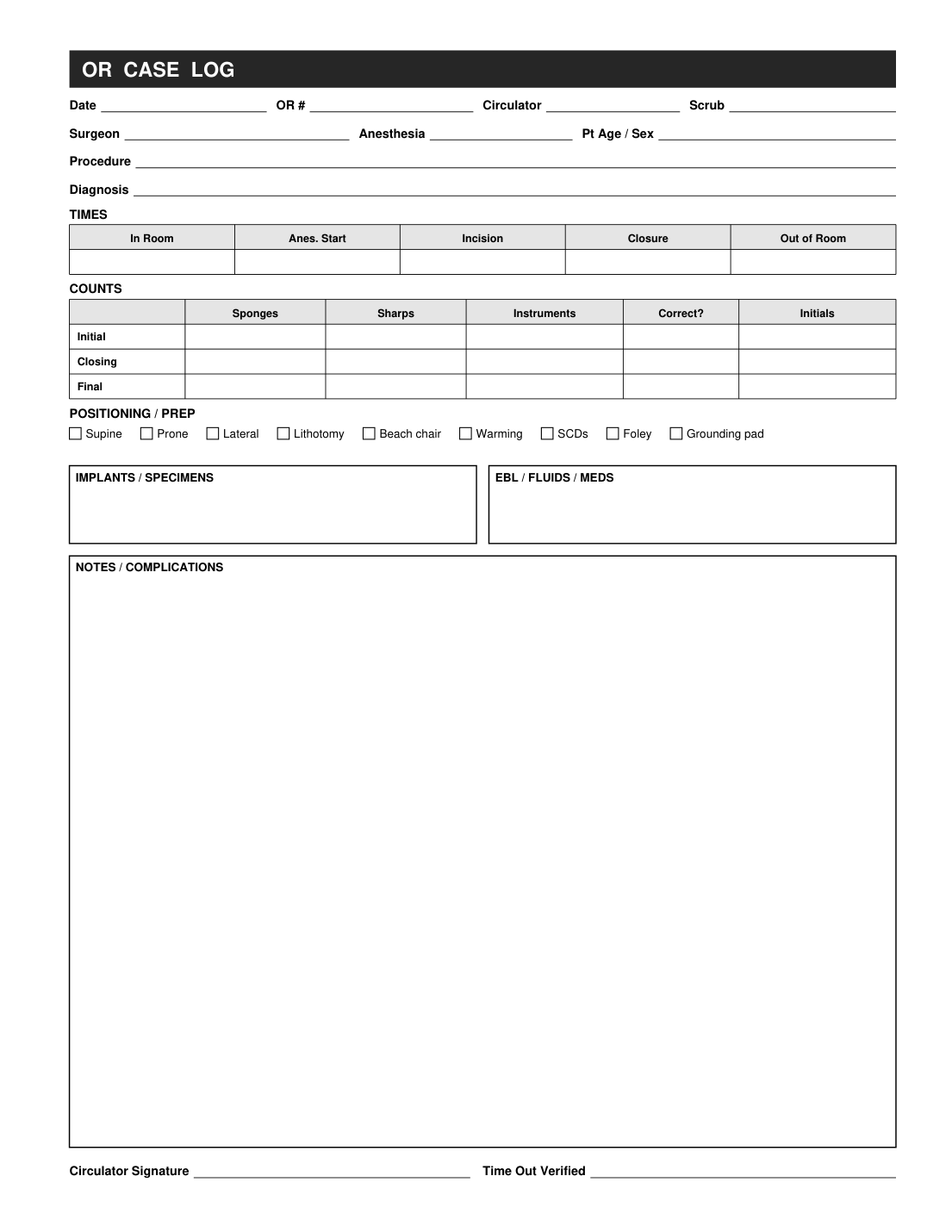
More than any other unit’s paperwork, an OR record is a timeline. The times most logs leave room for are in-room, anesthesia start, incision, close, and out-of-room.
These are not busywork. They feed turnover statistics, billing, and any case review that happens afterward, and they are close to impossible to reconstruct honestly once the day is over. Nurses who write them as they happen rather than at the end tend to have a much easier time at the end.
Tourniquet times belong in the same category and are less forgivable to guess at. Up time, down time, and total, with the pressure – written when it happens, because it is the one number where an estimate is not acceptable to anyone reviewing the case.
Positioning is worth a line too. What position, what devices were used, and where padding went. Pressure injuries from long cases develop from things that were decided in the first ten minutes, and the record of what was done is easier to produce at the time than three days later.
Counts
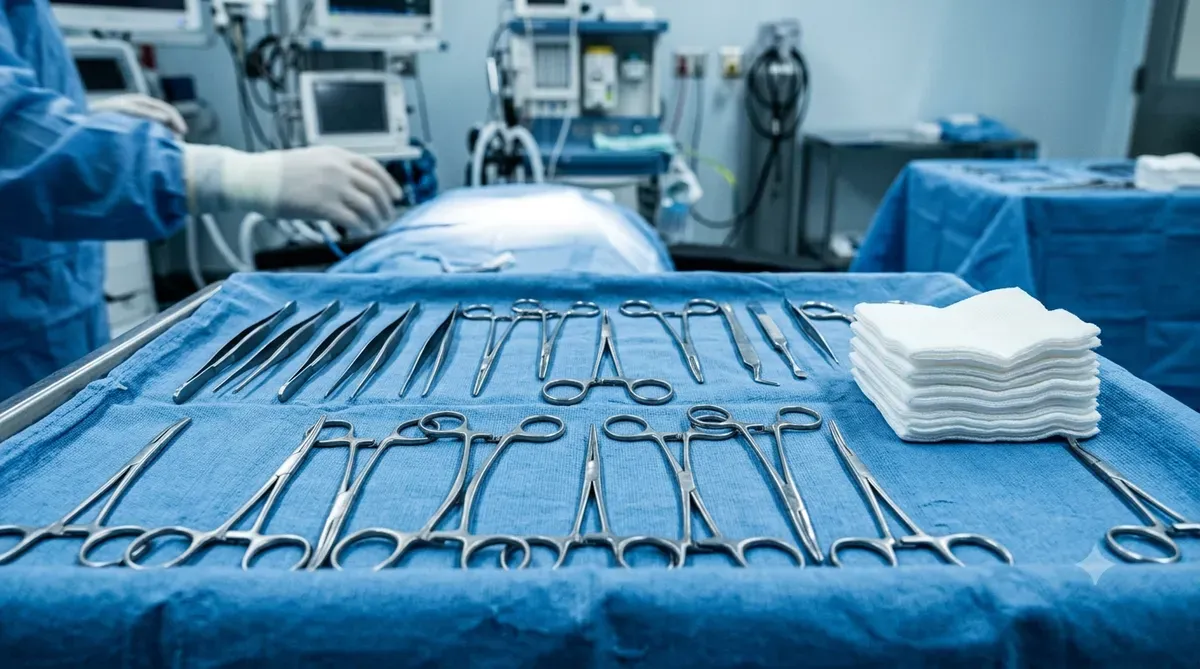
Sponge, sharp, and instrument counts are the part of the log that everyone treats seriously, and the log’s job here is narrow but important: it records what the count was, when it was performed, and who performed it with you.
The count itself follows your facility’s policy and AORN-based practice – the sheet does not replace either. What the sheet does is give the count a written home, so the initial count, any additions during the case, and the closing counts sit in one place rather than in two people’s memories.
Additions during the case are where a running written record earns its keep. A pack opened at minute forty is easy to remember at minute forty-five and easy to lose by minute two hundred. The log is what keeps the arithmetic honest across a long case, especially one where the team changes.
If a count is incorrect, what happens next is entirely your facility’s protocol – the sheet is not where that is worked out. What the sheet does afterward is record that it happened, what was done, and when, because that record is the one anyone reviewing the case will look for first.
Specimens and implants
Two things that cause the most follow-up phone calls after a case are specimens and implants, and both are worth writing down at the moment they happen.
For specimens, most logs note what it was, where it came from, and how it was handled. For implants, the item and its identifying information, along with where that information was recorded.
The pattern here is the same as everywhere else in nursing documentation: the details are easy to recall for about twenty minutes and surprisingly hard to recall the next morning.
Medications on the sterile field are a related case. Anything passed to the field gets labeled, and most logs leave room to note what was on the field and how much. It is a small entry that answers a question that comes up more often than people expect.
Handoff, in a place that does it twice
Perioperative handoff has a shape the rest of the hospital does not. You hand the patient to PACU at the end, and depending on the length of the case you may also hand the case itself to a relieving circulator partway through.
The second one is the harder handoff and the one a log makes possible. A relieving nurse walking into an open case needs the counts as they stand, the times so far, what is on the field, and anything that has not gone to plan. None of that can be summarized from memory by someone who is mid-case, and all of it is on the page if the page has been kept.
For the handoff to PACU, most of what the receiving nurse wants is already in the log – the procedure, the anesthesia, the times, drains and dressings, and anything unusual. Reading it is faster and more accurate than reciting it.
The notes column nobody thinks about until they need it
Most case logs have a small free space at the bottom, and experienced circulators tend to use it for things that were not routine. A positioning device that was added. A delay and why. Equipment that did not behave.
None of that feels important while the case is running. It becomes important when someone asks about that case three weeks later, and the difference between a useful answer and a shrug is usually two lines written at the time.
Building your own shorthand
New circulators often try to write everything and fall behind. Most settle into abbreviations of their own within a month or two, and the log stops being a burden and starts being the thing that lets them stop holding the case in their head.
A few failure patterns are worth naming. Writing the times at the end of the case rather than as they happen, which produces numbers that are approximately right and provably reconstructed. Leaving the notes column empty because nothing felt unusual at the time. Letting the log fall behind during the busiest part of the case, which is exactly the part someone will ask about later. And carrying the sheet out of the department, which is a policy problem rather than a personal one.
The one part worth keeping legible to someone else is anything a relieving nurse would need in a hurry: the counts, the times, and what is on the field. Personal shorthand is fine everywhere else.
If starting from a layout that already has the time fields, the count sections, and the specimen and implant lines sounds easier than ruling your own, that is what a pre-printed case log is for.

Sources
AORN – perioperative practice guidance on surgical counts and documentation
NCBI Bookshelf – perioperative nursing documentation overview
General nursing education references on case-log documentation
Disclaimer: This article is a documentation guide for nursing students and new nurses, for general informational purposes only. It is not medical, clinical, or exam advice, and is not affiliated with or endorsed by the NCLEX® or NCSBN®. Always follow your facility’s policies and your instructors’ guidance.