Tag: emergency nursing

  • Crash Cart & Defibrillator Daily Checklist

    Crash Cart & Defibrillator Daily Checklist

    This is a documentation guide for nursing students and new nurses, not medical or clinical advice. Every unit does things a little differently, so your facility’s policies and your preceptor always come first.

    A crash cart is the one piece of equipment on a unit that almost never gets used and absolutely cannot fail when it does. Most shifts, it sits closed in the corner. Then a patient codes, and every second spent discovering a dead battery or an empty oxygen tank is a second not spent on the patient. That is the entire reason crash cart checks exist as their own routine rather than being folded into general rounds – the check happens on a quiet day so the cart works on the day that is not quiet.

    Why this check is its own habit

    Most units assign the crash cart check to a specific person each shift rather than leaving it to whoever happens to be nearby, and there is a reason for that too. A task nobody owns is a task that quietly does not happen on a busy day, and a crash cart is exactly the kind of equipment where a busy day is precisely when it gets called on.

    The check itself is short – most nurses describe it as five to ten minutes once they know the layout. What it buys is not really about compliance paperwork. It is about not finding out mid-code that something is missing.

    New nurses sometimes assume the check is a formality because the cart almost never fails it. That assumption is exactly backwards. The reason the cart almost never fails is that someone checks it every shift. Skip a few checks and the odds catch up, usually on the one day it matters.

    The defibrillator and monitor

    The monitor on top of the cart is usually the first thing checked, and most protocols want it powered on and run through its own self-test rather than just glanced at. A self-test that returns an error is the whole point of doing this before the cart is needed rather than after.

    Beyond the self-test, a few things are worth a look: the battery indicator, whether the unit is sitting on its charger or plugged into a marked emergency outlet, and the ECG cables for any fraying or bent pins. The defibrillation pads are worth a glance too – both adult and pediatric sizes, still sealed, with an expiration date that has not passed. A sealed pad that has expired is easy to miss because the packaging looks fine.

    Pacing capability is worth confirming too, on units where the monitor supports it, since it is the one function that tends to go unchecked simply because it is used less often than the defibrillator function itself. A device can pass its basic self-test and still have a setting or cable issue that only shows up when someone actually tries to use the feature – which is exactly why the check exists as a habit rather than a one-time setup step.
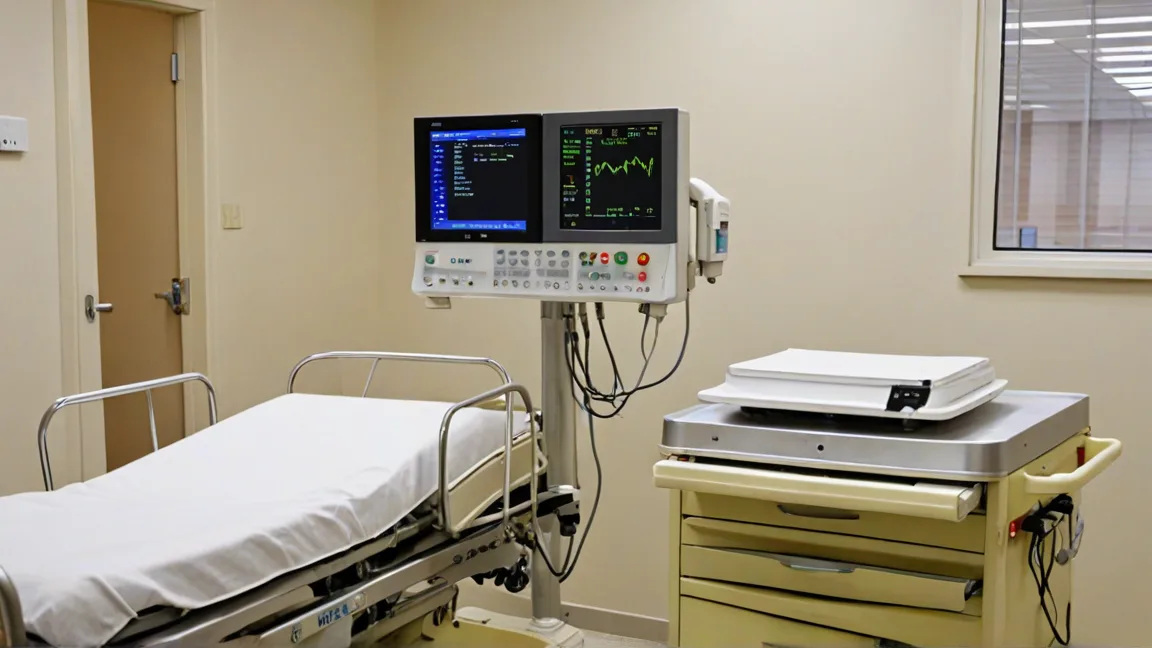
    Crash cart with a monitor-defibrillator parked in a hospital ER bay

    A crash cart and monitor-defibrillator parked in an ER bay

    Oxygen and the airway drawer

    Airway and oxygen come right after the monitor, for the obvious reason that they are the next things reached for in a code. The oxygen tank gauge gets read rather than assumed – most facilities set a minimum pressure a cart is allowed to sit at before the tank gets swapped, commonly somewhere in the neighborhood of 1000 PSI, though the exact number is worth confirming against your own unit’s policy rather than treating it as universal.

    The suction unit gets switched on to confirm it actually pulls negative pressure, with tubing and a Yankauer tip connected and ready rather than loose in a drawer. Laryngoscope handles – both blade shapes, if the cart stocks both – get tested for a light that comes on bright and steady rather than flickering. And the airway drawer generally gets checked for a full range of endotracheal tube sizes, a syringe for the cuff, lubricant, and a bag-valve mask with its reservoir attached.

    None of this is complicated. It is just the kind of thing that is easy to skip on a day when nothing goes wrong, which is exactly the day that makes the next code harder if it does. A tank that reads full at the start of a shift can still be the wrong tank to grab in a hurry if nobody rotated an older one to the front, which is why some units also check that the oldest tank on the cart is the one that gets used first.

    Seals and medications

    Crash carts are usually locked with a numbered breakaway seal rather than a regular lock, and the number matters more than it looks. Checking it against the number logged on the previous shift’s sheet is how a unit knows the cart has not been opened since the last full inventory. A mismatched or broken seal is not something to shrug off – it means the whole cart gets checked, not just the seal.

    The emergency medication tray itself usually stays sealed inside, and what gets checked from the outside is the expiration date printed on the tray – epinephrine, amiodarone, atropine, and the rest are usually tracked as a set rather than individually, with the earliest expiration date on the tray driving when the whole tray gets swapped.

    A worksheet built around these nine items is usually what this whole routine comes down to in practice – a place to mark pass, fail, or not applicable for each one, note the values that matter (battery percentage, tank PSI, expiration dates), and record the seal number for that shift.

    ER nurses at the nurses station, one charting in a logbook

    Charting the check is most of what this routine actually looks like

    When something fails the check

    A checklist only matters if something actually happens when an item fails it, and most units have a fairly standard sequence for that. The charge nurse gets told first, since a crash cart problem is not something to sit on until the next person’s shift. From there it usually splits by what failed – pharmacy for an expired or missing medication, clinical engineering or biomed for anything wrong with the monitor itself.

    The last step is writing it down – what was wrong, what was done about it, and who checked and who signed off. It feels like the least urgent part in the moment, and it is usually the part that matters most if anyone ever has to trace back why a cart was or was not ready on a given day.

    What tends to go wrong

    A few patterns come up often enough to be worth naming.

    Treating the self-test as optional. Powering the monitor on and seeing the screen light up is not the same as running the self-test. The screen can look fine while the self-test would have caught a problem.

    Eyeballing the oxygen gauge instead of reading it. A tank that looks full from across the room can be well below the facility’s minimum. The number matters more than the impression.

    Logging the seal number without actually comparing it. Writing down whatever number is currently on the cart is not the same as checking it against what the previous shift logged. The entire point of the seal is the comparison, not the record.

    Restocking without re-sealing. After a real code, the cart gets restocked and often skips getting a fresh seal and a logged number, which leaves the next shift checking a seal that was never really set.

    Rushing the check on a busy day. The days a check gets rushed or skipped are disproportionately the days a cart ends up needed, simply because busy days and code days overlap more than anyone would like.

    Why the routine is worth keeping boring

    The best thing a crash cart check can be is uneventful. Most shifts it will be – the seal matches, the battery light is green, the tank reads full, and the whole thing takes a few minutes. That is not the check failing to find anything. That is the check doing its job, quietly, on all the days that never make it into anyone’s story about a code.

    New nurses sometimes describe the check as busywork until the first time it catches something – an expired pad, a tank that needed swapping, a seal number that did not match. After that, most people stop seeing it as a formality.

    Sources

    American Heart Association (AHA) – Advanced Cardiovascular Life Support (ACLS) equipment standards
    The Joint Commission (TJC) – emergency management and resuscitation readiness guidance
    ECRI Institute – crash cart readiness and defibrillator safety references

    Disclaimer: This article is a documentation guide for nursing students and new nurses, for general informational purposes only. It is not medical, clinical, or exam advice, and is not affiliated with or endorsed by the NCLEX® or NCSBN®. Always follow your facility’s policies and your preceptor’s guidance.

  • How to Use an ER Nurse Report Sheet

    How to Use an ER Nurse Report Sheet

    This is a documentation guide for nursing students and new nurses, not medical or clinical advice. Every department does things a little differently, so your unit’s policies and your preceptor always come first.

    The emergency department moves fast, and most ER nurses lean on some kind of report sheet to keep several changing patients straight. Unlike a floor unit, patients here arrive, get worked up, and leave – sometimes within the hour. If you are still figuring out what belongs in each box, this is a walk through how experienced ED nurses tend to use theirs, section by section.

    Why the ER tends to need its own kind of sheet

    On a med-surg floor you keep the same patients all shift, so a sheet built for depth makes sense. In the ER it is usually built for turnover instead. What most ED sheets try to capture is who the patient is, why they came, what has been ordered, and where they are going next. When you are juggling four to six patients at once, a sheet that stays current is often what keeps small details from slipping.

    There is a second difference that shapes the layout. On a floor, your assignment is mostly set at the start of the shift. In the ED, it changes under you. A bay empties and refills within the hour, and the patient you spent forty minutes on is replaced by someone you know nothing about. Sheets built for the ED tend to use small repeating blocks for exactly that reason – a block is something you can finish, cross out, and start again, rather than a page you have to reorganize.

    It is also worth saying what the sheet is not. It is a working copy for your shift, not the chart and not a legal record. Most departments treat it as protected information while it exists – kept in a pocket, shredded at the end – and that policy is worth asking about on a new unit.

    The basics most nurses put at the top

    The top of each patient block usually holds the name, age, room or bay number, and time of arrival, with allergies (or “NKDA”) right beside them. Arrival time tends to earn its spot here more than on other units, simply because so many ED reassessments and decisions get tracked against the clock.

    A few other entries earn a place in the header on most ED sheets. Mode of arrival – walked in, brought by ambulance, transferred from another facility – because it frames everything that follows. Isolation status, for the same reason it belongs on any sheet: you want to know before you walk in, not after. And whoever is with the patient, since in the ED that person is often the only source of history you are going to get.

    For patients who cannot give their own history, the header is also where most nurses note where the story came from. “Per EMS” and “per daughter at bedside” are different levels of confidence, and the difference matters when someone asks you three hours later how you know.

    Chief complaint: the patient’s reason, in their words

    The chief complaint is the main problem that brought the patient in, and most nurses find it works best quoted from the patient: “chest pain 2 hours,” “twisted ankle,” “vomiting since morning.” It is tempting to tidy it into a diagnosis, but the short version usually serves the team better – it anchors the rest of the sheet, so anyone glancing at it can see why this patient is here.

    The reason experienced nurses guard the patient’s own wording is that a tidied version can quietly narrow the thinking. “Chest pain” and “pressure in my chest when I walk up the stairs” point in slightly different directions, and the second one is the version the patient actually said. Once it becomes “rule out ACS” on the sheet, the original detail is gone and nobody can get it back without asking again.

    Duration is the other half of it. “Chest pain” and “chest pain since Tuesday” are not the same presentation, and the timeframe is the part most often left off by people in a hurry.

    ESI level: what the number means

    This is the term that tends to confuse new ER nurses first. ESI stands for Emergency Severity Index, a five-level system used in most U.S. emergency departments to sort patients by urgency and by how many resources they are likely to need.

    • Level 1 – most urgent, needs life-saving action now.
    • Level 2 – high risk, should be seen very soon.
    • Level 3 – stable, but likely needs several resources such as labs, imaging, or IV medications.
    • Level 4 – likely needs one resource.
    • Level 5 – likely needs none, least urgent.

    What goes on your sheet is simply the level triage already assigned – you are recording acuity, not deciding it. Most nurses use it to order their own rounds, checking the Level 2 before the Level 5. Reading that number quickly is one of the first ER habits that clicks.

    One thing worth knowing early: the level assigned at the door is a snapshot, and patients do not always stay where they were sorted. Someone triaged as a 3 who has been waiting two hours and now looks worse is a conversation with the charge nurse, not a note to yourself. What the sheet contributes is the record that makes the conversation concrete – the level, the time it was assigned, and what you are seeing now.

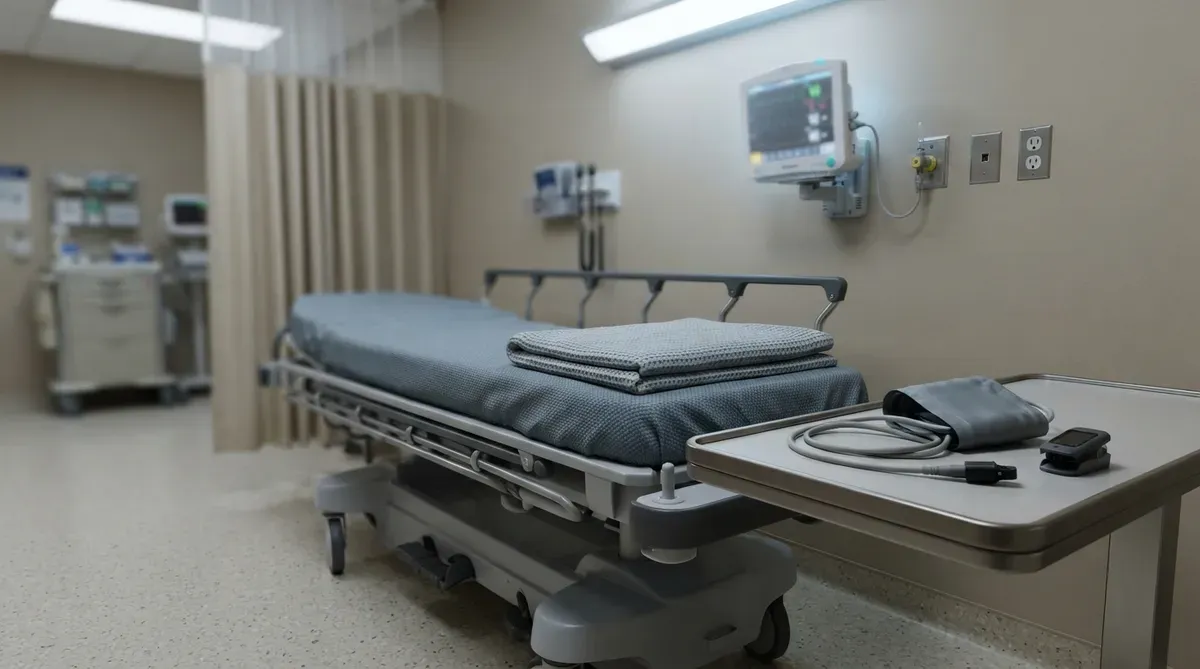
    Emergency department triage room with a vital signs monitor and stretcher

    Triage room with a vital signs monitor

    Orders: labs, imaging, and medications at a glance

    The orders section works as a running checklist of what the provider has requested – bloodwork, imaging, IV fluids, medications – with each one checked off as it is completed. Because an ED plan can change in minutes, that running list is often what tells you which labs were drawn but have not resulted yet.

    Most nurses end up using two marks rather than one: something for ordered, something else for done. The gap between those two marks is where the shift actually lives. A blood culture ordered at ten and drawn at ten twenty is fine; ordered at ten and still unmarked at eleven thirty is the thing you want to catch before the physician does.

    Pending is its own category and deserves its own space. A CT that has been ordered, a patient who has gone to imaging, a consult that has been called but not answered – these are the items that fall through when the department gets busy, because they are not tasks you can complete. They are tasks you are waiting on, and the only way to keep them visible is to write them somewhere you will look again.

    Worth saying plainly: a report sheet records what was ordered and whether it is done. It is not the place to calculate doses or work out treatment decisions. For anything involving medications, your facility’s protocols and your preceptor are the sources that matter.

    Vitals and reassessment times

    ER patients get vital signs rechecked, and higher acuity generally means more often. The vitals area usually holds heart rate, blood pressure, respiratory rate, oxygen saturation, temperature, and pain score. The part new nurses most often skip is the time beside each set – and it is the part that turns a column of numbers into a trend. A trend is usually what hints that something is changing.

    Pain scores follow the same rule and get skipped for the same reason. A score recorded before a medication and again afterward, both with times, tells a story that a single number cannot. It also answers the question that comes up most often in review – whether the response to treatment was reassessed – without anyone having to reconstruct it.

    Room for a repeat set beside the first is the layout most ED nurses prefer. Two columns side by side make a change obvious at a glance, which is different from two numbers written an inch apart at different times of day.

    When the plan changes mid-shift

    The thing that separates an ED sheet from every other unit’s is how often it goes out of date.

    A patient who was going home is now being admitted. A complaint that started as abdominal pain has become something else. The bay you were about to clean is holding an admitted patient for the next four hours.

    Most nurses handle this by crossing out rather than erasing. The old disposition with a line through it and the new one beside it takes a second to write, and it means the next nurse can see that something changed rather than only what it changed to. The related habit is not writing in something you cannot amend – an ED sheet that cannot be updated gets abandoned by noon.

    Disposition: where the patient goes next

    Disposition is just the plan for where this patient ends up. The usual entries are:

    • Discharge – going home.
    • Admit – staying in the hospital (often with the unit noted, such as tele or ICU).
    • Transfer – moving to another facility.
    • Observation – staying for continued monitoring.

    Noting it early tends to pay off. If a patient is being admitted, you can start gathering report for the receiving nurse instead of scrambling once the bed is ready. It also keeps your own read on the board accurate, so you have a sense of which bays are about to open.

    Discharges have their own small checklist that tends to live in this part of the sheet: prescriptions given, instructions reviewed, follow-up arranged, ride home confirmed. None of these are complicated, and all of them are easy to lose track of when three other things are happening. Nurses who tick them off in the same order every time rarely get the call afterward asking whether the patient understood the instructions.

    Handoff: where SBAR fits

    When a patient is handed off, SBAR keeps report organized: Situation, Background, Assessment, Recommendation. A sheet that has been kept current usually already holds every piece. The situation is the chief complaint and ESI level, the background is history and allergies, the assessment is your vitals and findings, and the recommendation is the disposition and what is still pending. Nurses who fill the sheet as they go often find the handoff mostly writes itself.

    ED handoffs come in two flavors and the sheet serves both. Handing off to the oncoming ED nurse is a wide, shallow report – several patients, each in a couple of sentences, with the emphasis on what is pending. Handing off to an inpatient unit is narrow and deep – one patient, and the receiving nurse wants the whole story.

    The recommendation is the part new nurses leave off most, usually because it feels presumptuous. Within scope, it is not. You are not diagnosing; you are saying what you think should happen next, and after several hours in the room you are the person best placed to say it.

    What tends to go wrong

    A few patterns show up often enough to name.

    Writing too much. Trying to transcribe the chart produces a sheet too dense to read at a glance, which defeats the purpose.

    Letting it go stale. A sheet that reflects the department as it was two hours ago is worse than no sheet, because it looks current.

    Keeping it only in your head for the busy patient. The patient taking all your attention is the one whose details you are most sure you will remember, and the one you are most likely to be asked about later.

    Losing it. An ED sheet in a pocket is a document with patient information on it. Where it goes at the end of the shift is a policy question, not a personal preference.

    Building your own shorthand

    Most ED nurses land on their own set of marks within a month or two – a symbol for pending, another for done, an arrow for a trend heading the wrong way, a corner reserved for the two things they need to say in report.

    None of it is standardized and it does not need to be. The one thing worth keeping legible is anything another nurse might need in a hurry if you are pulled into a room: allergies, code status, the pending item that is about to matter.

    It gets easier

    The first ER shifts feel like drinking from a fire hose, and most people’s sheets look scribbled for a while. That is normal, and it is not a sign you are doing it wrong. Nurses who stick with the same layout every shift and build their own shorthand usually find that filling it in stops taking the attention they would rather spend on patients.

    If starting from a ready-made layout built for the pace of the ED sounds easier than drawing your own boxes, that is what a pre-printed report notebook is for.

    Sources

    • AHRQ – Emergency Severity Index (ESI), a triage tool for emergency departments
    • NCBI Bookshelf – emergency nursing triage and reassessment overview
    • General nursing education references on report-sheet documentation

    Disclaimer: This article is a documentation guide for nursing students and new nurses, for general informational purposes only. It is not medical, clinical, or exam advice, and is not affiliated with or endorsed by the NCLEX® or NCSBN®. Always follow your facility’s policies and your instructors’ guidance.