This is a documentation guide for nursing students and new nurses, not medical or clinical advice. Every unit does things a little differently, so your facility’s policies and your preceptor always come first.
A crash cart is the one piece of equipment on a unit that almost never gets used and absolutely cannot fail when it does. Most shifts, it sits closed in the corner. Then a patient codes, and every second spent discovering a dead battery or an empty oxygen tank is a second not spent on the patient. That is the entire reason crash cart checks exist as their own routine rather than being folded into general rounds – the check happens on a quiet day so the cart works on the day that is not quiet.
Why this check is its own habit
Most units assign the crash cart check to a specific person each shift rather than leaving it to whoever happens to be nearby, and there is a reason for that too. A task nobody owns is a task that quietly does not happen on a busy day, and a crash cart is exactly the kind of equipment where a busy day is precisely when it gets called on.
The check itself is short – most nurses describe it as five to ten minutes once they know the layout. What it buys is not really about compliance paperwork. It is about not finding out mid-code that something is missing.
New nurses sometimes assume the check is a formality because the cart almost never fails it. That assumption is exactly backwards. The reason the cart almost never fails is that someone checks it every shift. Skip a few checks and the odds catch up, usually on the one day it matters.
The defibrillator and monitor
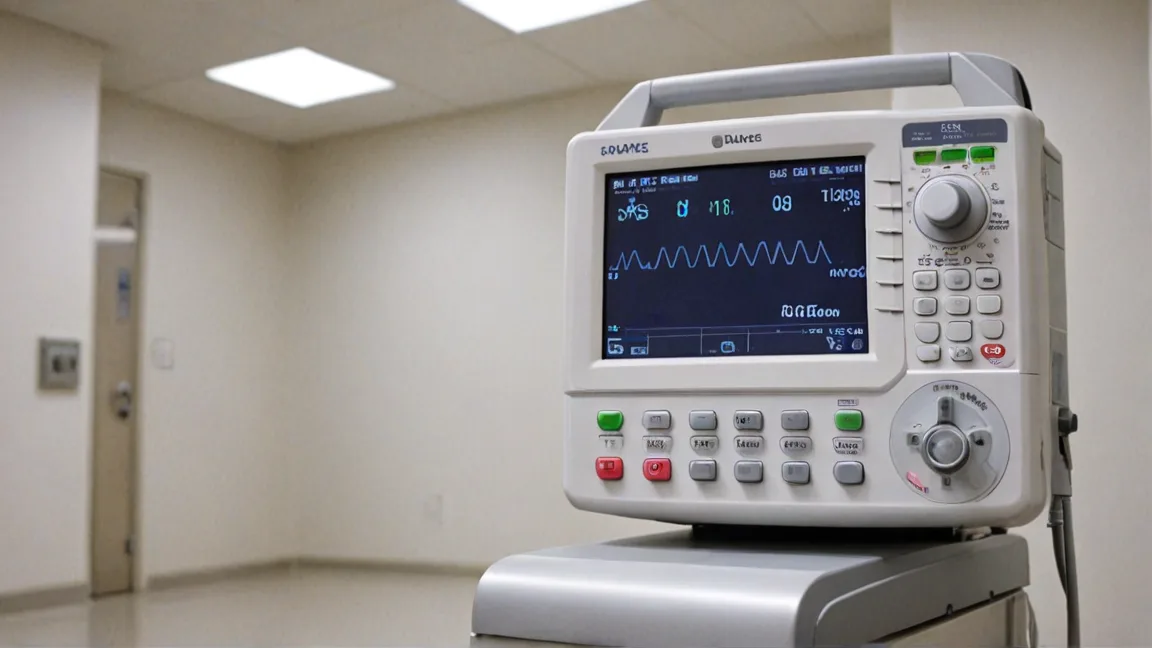
The monitor on top of the cart is usually the first thing checked, and most protocols want it powered on and run through its own self-test rather than just glanced at. A self-test that returns an error is the whole point of doing this before the cart is needed rather than after.
Beyond the self-test, a few things are worth a look: the battery indicator, whether the unit is sitting on its charger or plugged into a marked emergency outlet, and the ECG cables for any fraying or bent pins. The defibrillation pads are worth a glance too – both adult and pediatric sizes, still sealed, with an expiration date that has not passed. A sealed pad that has expired is easy to miss because the packaging looks fine.
Pacing capability is worth confirming too, on units where the monitor supports it, since it is the one function that tends to go unchecked simply because it is used less often than the defibrillator function itself. A device can pass its basic self-test and still have a setting or cable issue that only shows up when someone actually tries to use the feature – which is exactly why the check exists as a habit rather than a one-time setup step.
Oxygen and the airway drawer
Airway and oxygen come right after the monitor, for the obvious reason that they are the next things reached for in a code. The oxygen tank gauge gets read rather than assumed – most facilities set a minimum pressure a cart is allowed to sit at before the tank gets swapped, commonly somewhere in the neighborhood of 1000 PSI, though the exact number is worth confirming against your own unit’s policy rather than treating it as universal.
The suction unit gets switched on to confirm it actually pulls negative pressure, with tubing and a Yankauer tip connected and ready rather than loose in a drawer. Laryngoscope handles – both blade shapes, if the cart stocks both – get tested for a light that comes on bright and steady rather than flickering. And the airway drawer generally gets checked for a full range of endotracheal tube sizes, a syringe for the cuff, lubricant, and a bag-valve mask with its reservoir attached.
None of this is complicated. It is just the kind of thing that is easy to skip on a day when nothing goes wrong, which is exactly the day that makes the next code harder if it does. A tank that reads full at the start of a shift can still be the wrong tank to grab in a hurry if nobody rotated an older one to the front, which is why some units also check that the oldest tank on the cart is the one that gets used first.
Seals and medications
Crash carts are usually locked with a numbered breakaway seal rather than a regular lock, and the number matters more than it looks. Checking it against the number logged on the previous shift’s sheet is how a unit knows the cart has not been opened since the last full inventory. A mismatched or broken seal is not something to shrug off – it means the whole cart gets checked, not just the seal.
The emergency medication tray itself usually stays sealed inside, and what gets checked from the outside is the expiration date printed on the tray – epinephrine, amiodarone, atropine, and the rest are usually tracked as a set rather than individually, with the earliest expiration date on the tray driving when the whole tray gets swapped.
A worksheet built around these nine items is usually what this whole routine comes down to in practice – a place to mark pass, fail, or not applicable for each one, note the values that matter (battery percentage, tank PSI, expiration dates), and record the seal number for that shift.

When something fails the check
A checklist only matters if something actually happens when an item fails it, and most units have a fairly standard sequence for that. The charge nurse gets told first, since a crash cart problem is not something to sit on until the next person’s shift. From there it usually splits by what failed – pharmacy for an expired or missing medication, clinical engineering or biomed for anything wrong with the monitor itself.
The last step is writing it down – what was wrong, what was done about it, and who checked and who signed off. It feels like the least urgent part in the moment, and it is usually the part that matters most if anyone ever has to trace back why a cart was or was not ready on a given day.
What tends to go wrong
A few patterns come up often enough to be worth naming.
Treating the self-test as optional. Powering the monitor on and seeing the screen light up is not the same as running the self-test. The screen can look fine while the self-test would have caught a problem.
Eyeballing the oxygen gauge instead of reading it. A tank that looks full from across the room can be well below the facility’s minimum. The number matters more than the impression.
Logging the seal number without actually comparing it. Writing down whatever number is currently on the cart is not the same as checking it against what the previous shift logged. The entire point of the seal is the comparison, not the record.
Restocking without re-sealing. After a real code, the cart gets restocked and often skips getting a fresh seal and a logged number, which leaves the next shift checking a seal that was never really set.
Rushing the check on a busy day. The days a check gets rushed or skipped are disproportionately the days a cart ends up needed, simply because busy days and code days overlap more than anyone would like.
Why the routine is worth keeping boring
The best thing a crash cart check can be is uneventful. Most shifts it will be – the seal matches, the battery light is green, the tank reads full, and the whole thing takes a few minutes. That is not the check failing to find anything. That is the check doing its job, quietly, on all the days that never make it into anyone’s story about a code.
New nurses sometimes describe the check as busywork until the first time it catches something – an expired pad, a tank that needed swapping, a seal number that did not match. After that, most people stop seeing it as a formality.
Sources
American Heart Association (AHA) – Advanced Cardiovascular Life Support (ACLS) equipment standards
The Joint Commission (TJC) – emergency management and resuscitation readiness guidance
ECRI Institute – crash cart readiness and defibrillator safety references
Disclaimer: This article is a documentation guide for nursing students and new nurses, for general informational purposes only. It is not medical, clinical, or exam advice, and is not affiliated with or endorsed by the NCLEX® or NCSBN®. Always follow your facility’s policies and your preceptor’s guidance.