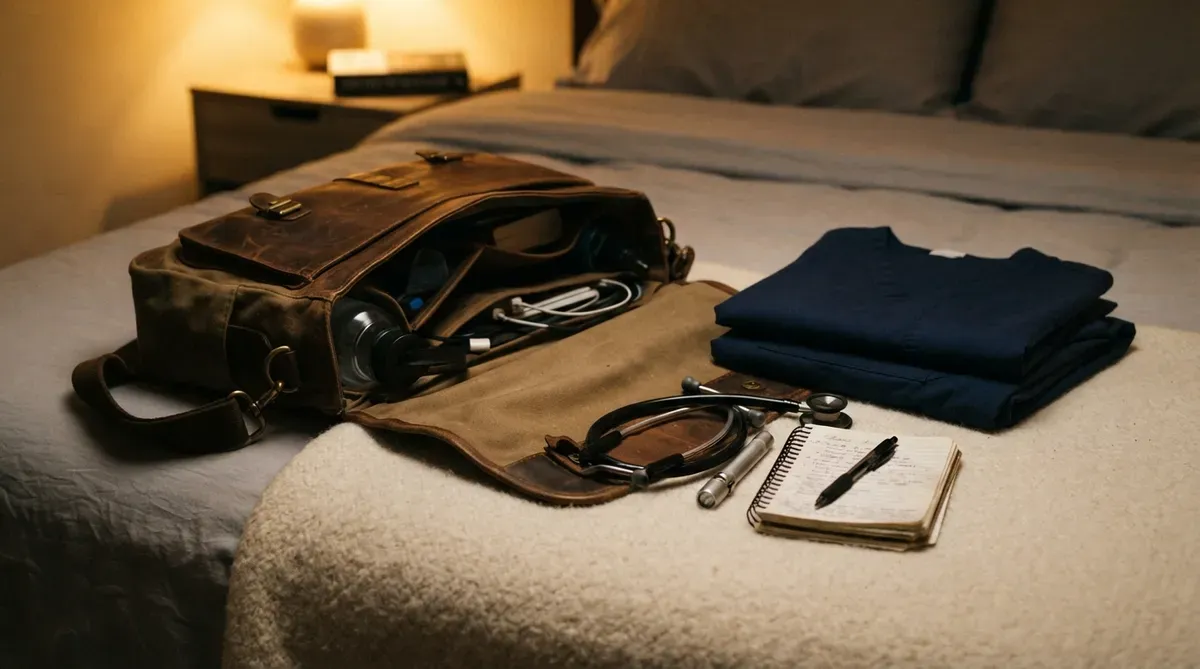
What to Bring to Your First Clinical Day (A Realistic List)
—
—
As an Amazon Associate I earn from qualifying purchases. This is a documentation guide for nursing students and new nurses, not medical or clinical advice. Every unit does things a little differently, so your facility’s policies and your preceptor always come first.
Every nursing program hands out a supply list. Most of them are longer than they need to be, and the things students actually reach for on day one are not always the things printed on it. This is the honest version – which is not a substitute for your school’s list, since your program’s requirements are the ones that count.
What tends to get used on day one
A stethoscope. Not the most expensive one, but not the cheapest either. The very cheap ones genuinely do not transmit sound well, and a student who cannot hear something is left unsure whether it is absent or just inaudible. The mid-range classic models are what most students end up with, largely because preceptors recognize them and they last through school and into a first job.
A penlight. Pupils, mouth, wound edges, and finding a dropped cap under a bed. Most people buy two, having lost the first.
Bandage scissors. Tape, tubing, dressings, packaging. The blunt-tip ones are the usual recommendation.
A watch with a second hand. Not a smartwatch – many units do not allow them, and a respiratory rate is hard to count on a phone you are not supposed to be holding. An inexpensive analog watch tends to outlast fancier options.
Compression socks. This is the item most students skip and then buy in week three, after their first full day standing.
Shoes you can clean. Something wipeable rather than fabric. Things land on your shoes in a hospital.
Black pens, several. They vanish. Black rather than blue is what most facilities ask for, and it is easier to have the right one than to borrow.
Your student ID and any required paperwork. Immunization records, a skills checklist, a badge that has not been activated yet – the administrative items are the ones that stop you at the door, and they are the least interesting to remember.
What experienced students carry that first-years do not
There are a few items that rarely make an official list and show up in almost every second-year’s bag.
A small notebook that fits in a pocket. Not the big binder. Something you can pull out standing in a hallway without looking like you are settling in.
A second pair of socks. For the day something spills.
A phone charger or a small battery. Twelve hours is longer than most phones, and your drug reference lives on that phone.
A pen light with a pupil gauge on the barrel, which saves carrying a separate card.
A watch with a second hand you can read without turning your wrist. A small thing that matters when you are counting respirations while holding a wrist.
Lip balm and a hair tie. Both trivial, both the sort of thing nobody thinks about until hour six in dry hospital air.
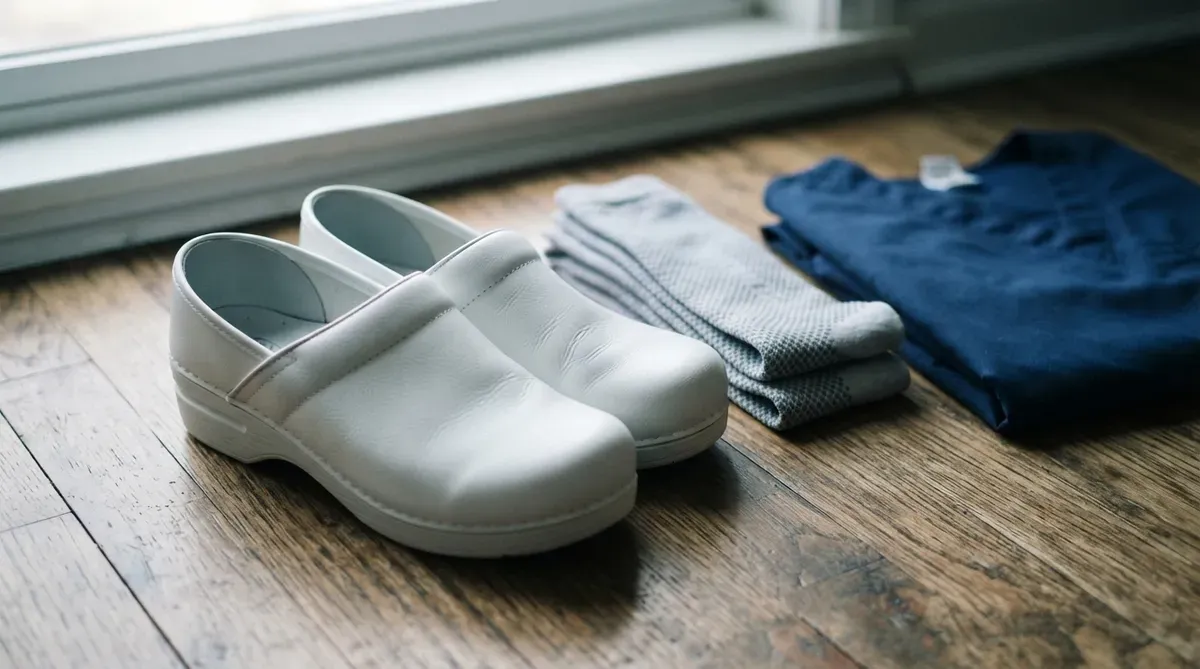
What tends to stay in the bag
A drug guide the size of a brick. Your phone has a drug reference and it is faster, assuming your unit allows phones. Check that first – some units do not, and a small pocket guide is the fallback.
A dozen highlighters. Most people use one.
An expensive bag. A cheap one gets filled with the same things.
Every optional item on the list. You can add later. Week one is not the time to find out which pouch organizer you prefer.
Anything that jangles. Badge reels with charms, keys on a lanyard, bracelets. Quiet is easier to move in.
Perfume or scented lotion. Hospitals are full of people who are nauseated.
Long or elaborate nails. Most programs have a policy, and it is usually stricter than students expect.
What nobody puts on the list
Snacks. You may not get a proper lunch. A granola bar in a pocket is not a luxury.
A hair tie, even if you do not think you need one.
Cash or a card for the vending machine. Cafeterias close.
A written list of your own questions. You will be told to ask if you have questions, and then your mind will go blank. Writing them the night before is what makes them come out.
A plan for the drive and the parking. Student parking is often not staff parking, and it is often further away than you think. Arriving twenty minutes early on day one costs very little and removes an entire category of stress.
Something to eat before you leave the house. Whether or not you get a break, the first few hours are the ones where being hungry shows.
The night before
The students who describe an easy first day tend to describe the same evening beforehand.
Uniform out and checked against the dress code. Bag packed, not planned to be packed. Route and parking looked up. Alarm set earlier than feels necessary. Questions written down. And a look at whatever the unit is – if you know you are going to a med-surg floor, half an hour reading about the most common admissions there will not make you an expert, but it will make the words less foreign.
What does not help is trying to review everything. You are not being tested on day one. Most instructors describe the first day as almost entirely orientation – where things are, who people are, how the unit runs.
The thing most students end up using most
Somewhere to write.
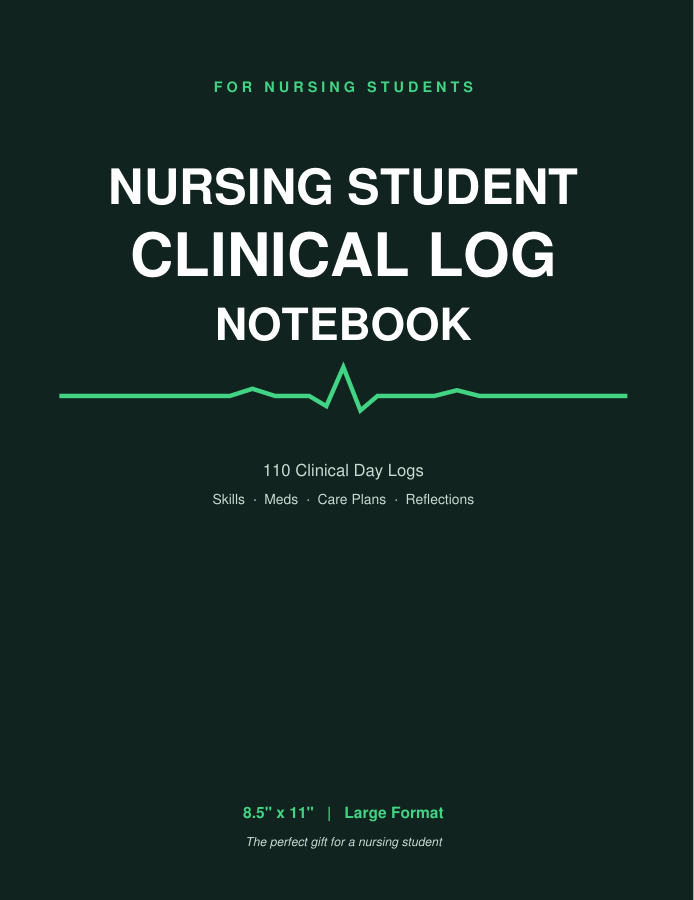
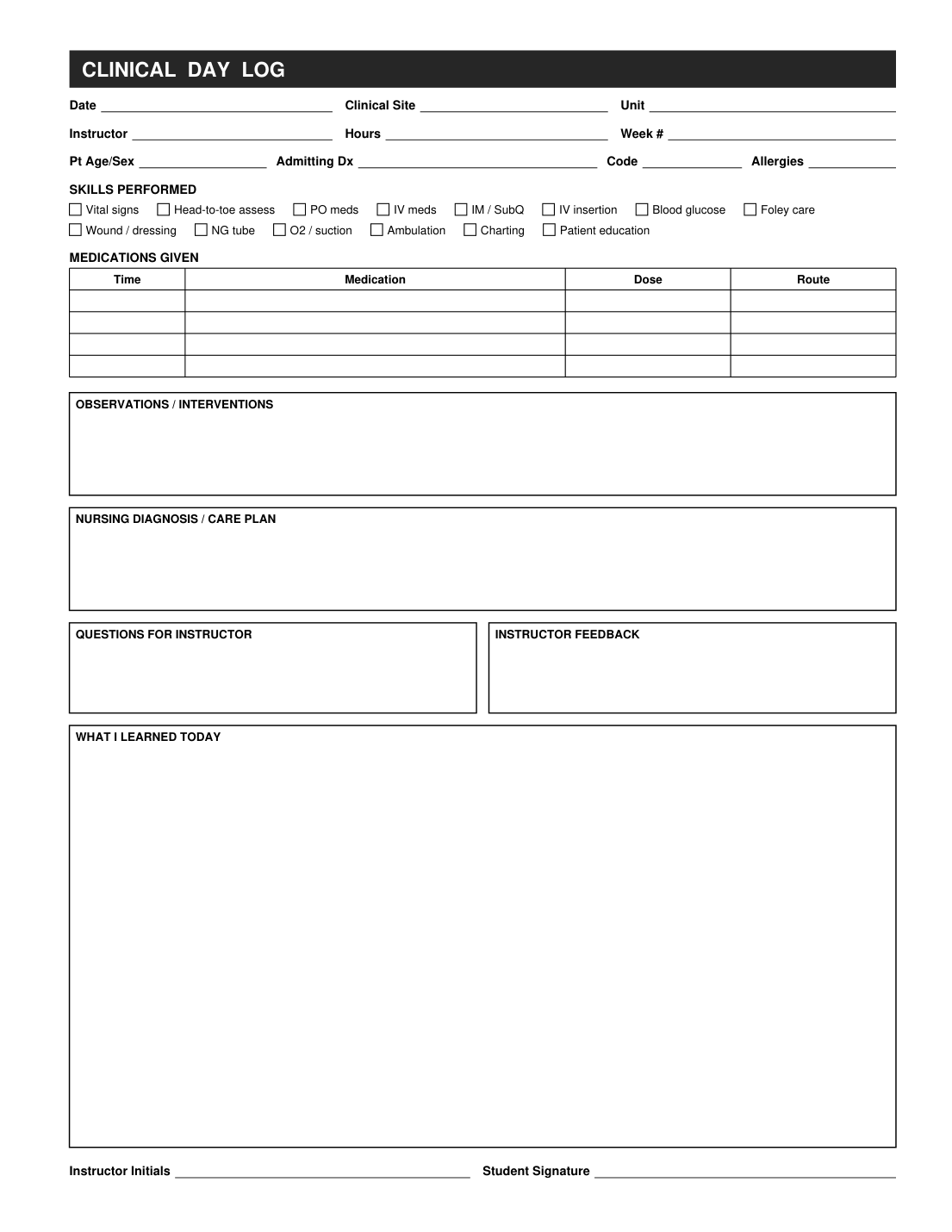
Clinical days hand you information from several directions at once, and almost none of it repeats. Students who keep a page per clinical day – patient basics, skills performed and who supervised, medications given, questions for the instructor, and what they learned – tend to find that the writing is what turns a blurred day into something they can actually study from.
That last box, the reflection one, is the one students skip and later wish they had not.
One thing worth being careful about from the first day: what you write down should not identify anyone. Age, diagnosis, and relevant history are what you need to study from. Names, room numbers, and dates of birth are not, and a notebook that leaves the building with you is a different kind of document from the chart. Your program’s policy is the one that governs.
What the first day actually looks like
Most first clinical days follow a similar shape, and knowing it removes some of the dread.
You will arrive early and stand around. There will be a tour, and you will not retain most of it. You will be introduced to a nurse who is busy, and you will spend some of the day feeling like you are in the way. You will probably do fewer hands-on tasks than you expected – vital signs, help with a bath, maybe a bed change.
That is normal, and it is not a bad day. Day one is about learning the geography and the rhythm. The clinical work builds from week two onward, and it builds faster once you are not spending attention on where the linen is kept.
If a ready-made layout sounds easier than reformatting a notebook every week, that is what a pre-printed clinical log is for.
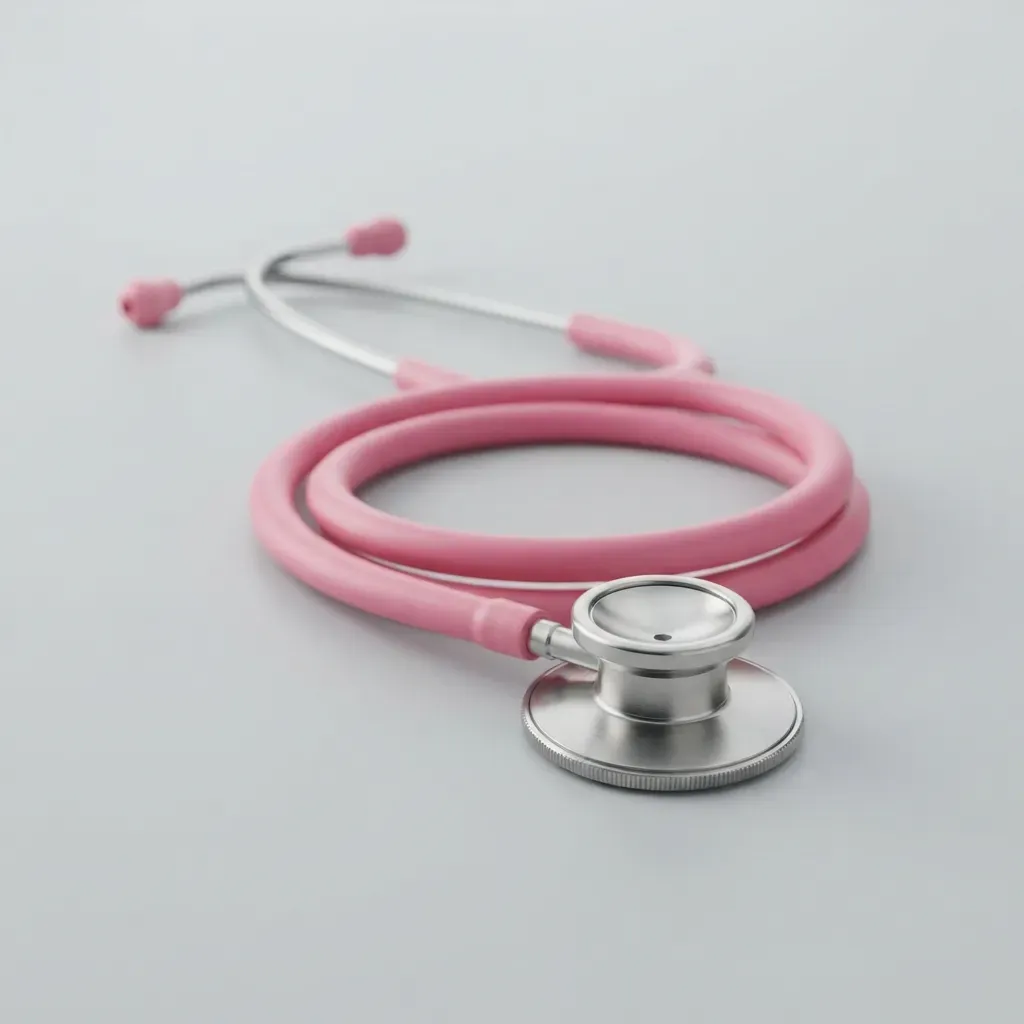
A word on the stethoscope, since it is the one real decision
Of everything on the list, the stethoscope is the only item where the choice actually matters, so it is worth a paragraph.
The problem with the cheapest ones is not that they feel flimsy. It is that they genuinely do not transmit quiet sounds well, which leaves a student unable to tell whether a murmur or a faint bowel sound is absent or simply inaudible on this particular instrument. That is a bad position to learn in, because you cannot calibrate against your own equipment.
The problem at the other end is different: an expensive cardiology model is more instrument than a first-year needs, and it is the item most likely to walk off a counter.
Most students land in the middle, on a well-known classic model, for reasons that are practical rather than romantic. Preceptors recognize it, replacement parts are easy to find, and it lasts into a first job rather than being replaced after graduation. Whichever you pick, put your name on it the day you get it – engraved, taped, written on the tubing. Stethoscopes disappear more than anything else students own.
One more thing worth knowing: the ear tips matter as much as the chestpiece. If they do not seal, nothing else about the instrument helps. Angle them forward, toward your nose, rather than straight back.
One last thing
You will feel like you do not belong there on the first day. Nearly everyone does, including the nurses who look impossibly fast – they were where you are, and they tend to remember it better than they let on.
Bring the scissors. Bring the snacks. Write things down.
Sources
General nursing education references on clinical preparation and student supply lists
NCBI Bookshelf – clinical learning environment and student preparation overview
Manufacturer specifications for commonly recommended student stethoscopes
Disclaimer: This article is a documentation guide for nursing students and new nurses, for general informational purposes only. It is not medical, clinical, or exam advice, and is not affiliated with or endorsed by the NCLEX® or NCSBN®. Always follow your facility’s policies and your instructors’ guidance.