Tag: “cat-exam”

  • NCLEX Exam Day Checklist

    NCLEX Exam Day Checklist

    This is a study guide for nursing students and NCLEX candidates, not exam prep counseling or medical advice. Testing rules change from time to time, so always check your Authorization to Test (ATT) email and Pearson VUE’s current candidate rules before exam day.

    Most people spend months getting ready for the content of the NCLEX and about ten minutes getting ready for the day itself. That imbalance is where a lot of avoidable stress comes from. The questions are hard enough on their own; nobody needs to add a name mismatch on an ID, a watch left on a wrist, or a stomach cramp from ice water at the two-hour mark.

    The good news is that exam day is one of the most predictable parts of the whole process. The testing center follows the same routine for every candidate, and once that routine is familiar, there is a lot less to worry about when you walk through the door.

    The two things you cannot forget

    Everything else on this list is about comfort. These two are about whether you get to sit the exam at all.

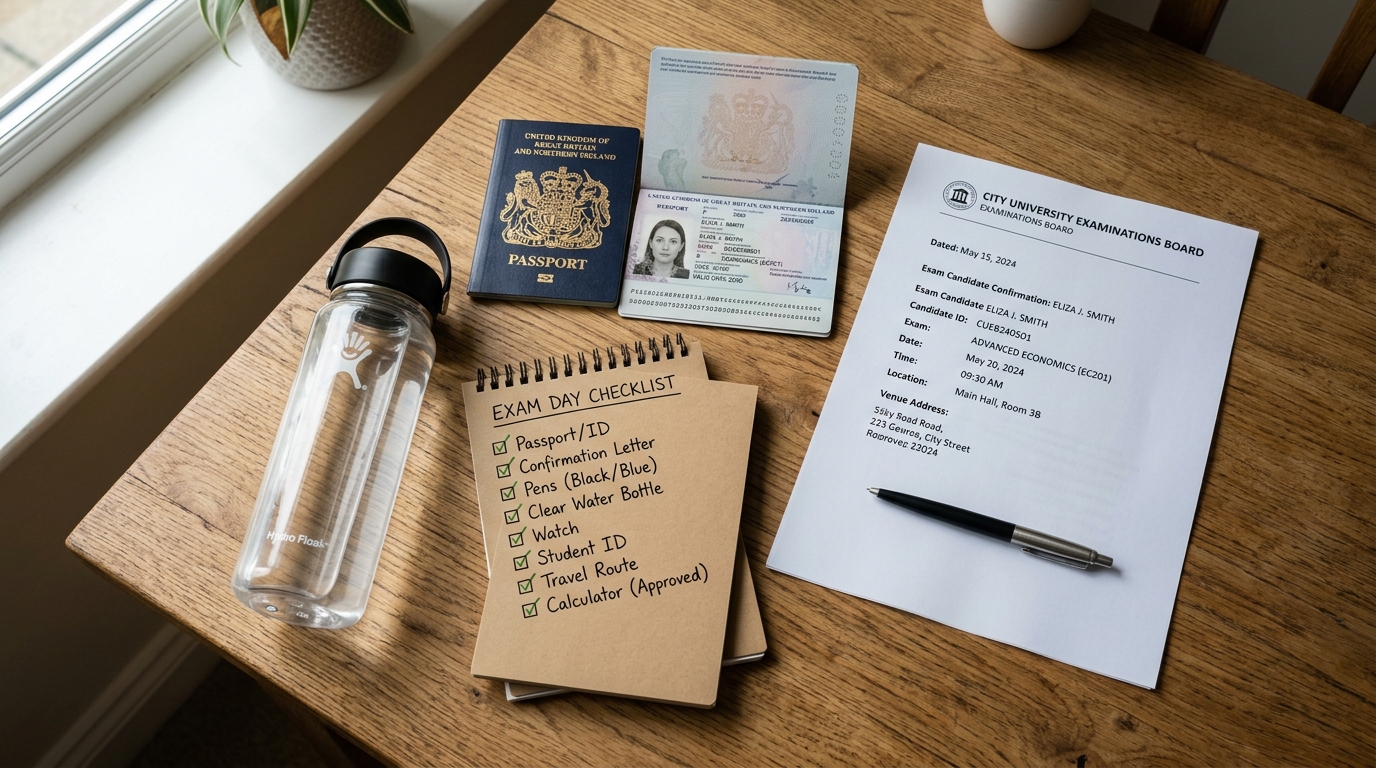
    The first is a valid, unexpired, government-issued photo ID — for most candidates in the U.S., a driver’s license or a passport. The name on it has to match the name on your registration and your ATT. Not roughly, but exactly: a missing middle name, a hyphen in one place and not the other, or a recent marriage that changed a last name on one document but not the other is enough for a center to turn someone away. It’s worth pulling up the ATT email a week ahead and checking it against the ID side by side, while there is still time to fix a mismatch.

    The second is the ATT itself. Having it on a phone is fine for reference, but a printed copy is a small insurance policy. Phones go into a locker at check-in, and a piece of paper doesn’t run out of battery.

    What goes in the locker

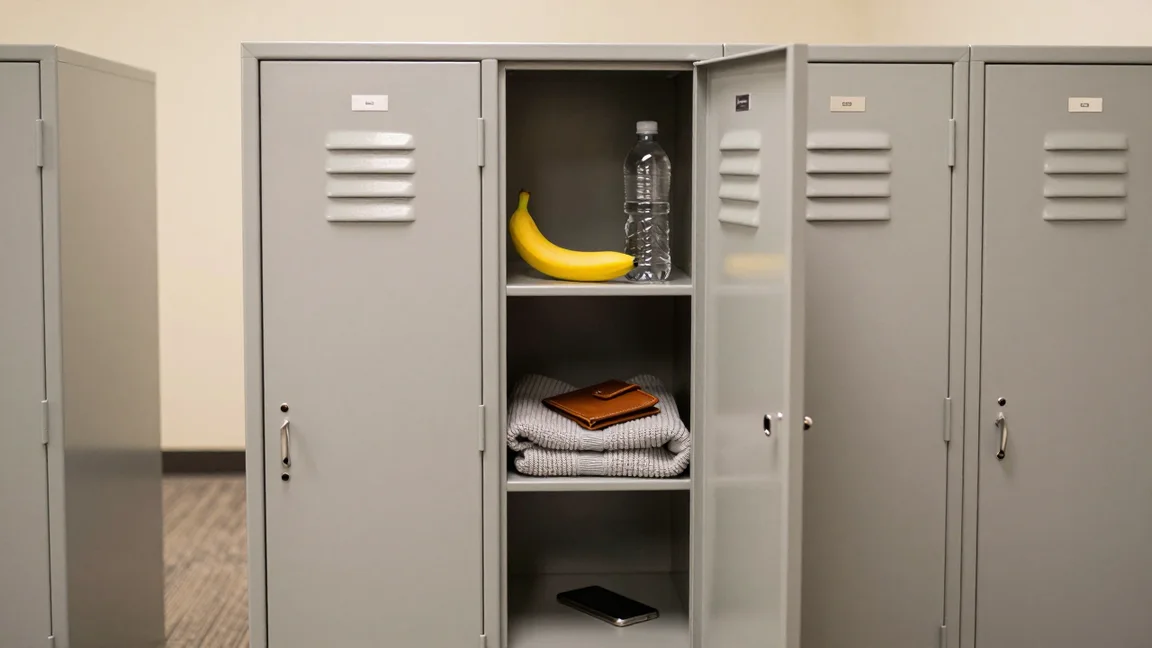
    Nothing comes into the testing room with you — not a water bottle, not a snack, not a tissue from your own pocket. Anything you might want during the day waits in an assigned locker until a break. That makes the locker worth packing on purpose rather than as an afterthought.

    Something small and easy to eat helps keep blood sugar steady through a long session: a banana, a protein bar, or a couple of squares of chocolate. A bottle of room-temperature water is gentler than an ice-cold one on a stomach that is already tense. If you take regular medication, or know you’re prone to headaches, it belongs in the locker too, along with anything like eye drops or antacids you might want at the halfway point.

    What to leave at home

    Watches are the item that catches the most people. Smartwatches obviously aren’t allowed, but neither are ordinary analog ones — there is a clock available and an on-screen timer, and the rule is simply no wrist devices of any kind. Taking it off in the car saves a trip back out to the parking lot.

    Clothing matters more than people expect, too. Hoodies, jackets with lots of pockets, and cargo pants all mean a longer look at check-in, because every pocket and hood has to be shown empty. Simple layers are easier: testing rooms can run cold, and a plain long-sleeve top is easier to manage than a heavy jacket you may be asked to remove anyway.

    And the study notes can stay home. Flipping through a summary sheet in the parking lot rarely adds anything at that point, and it tends to leave people more anxious, not less. The morning of the exam is better spent resting than cramming.
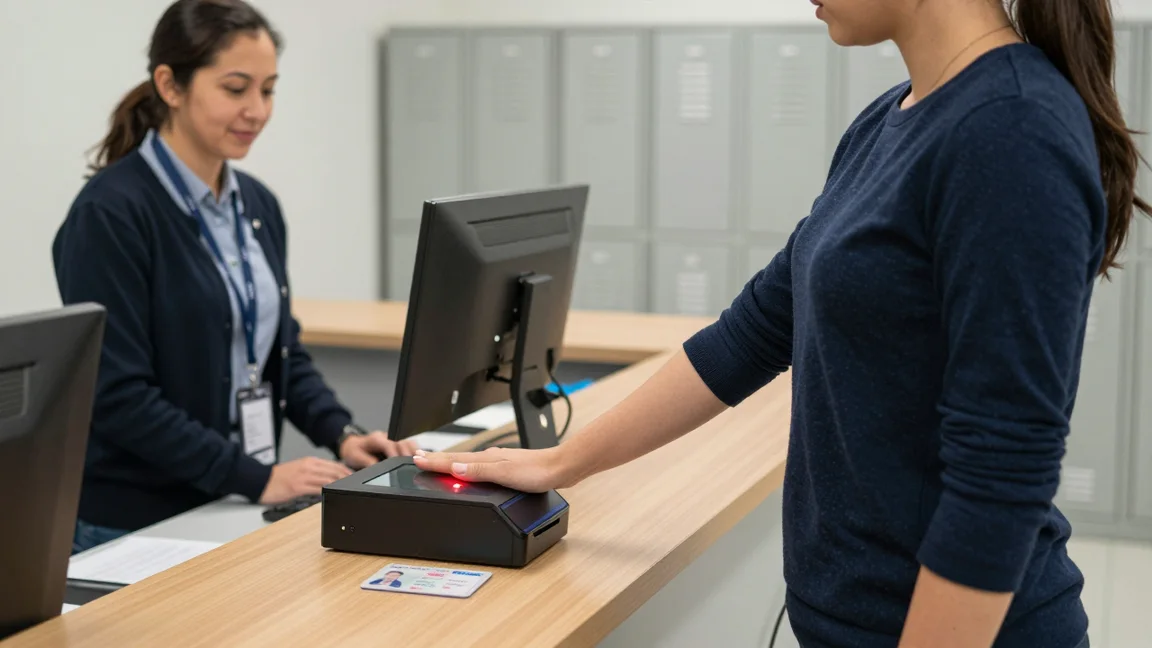
    NCLEX candidate placing her palm on a biometric scanner at test center check-in

    A palm scan at check-in, repeated every time a candidate re-enters the testing room

    Walking in: check-in, step by step

    Plan to arrive about 30 minutes before your appointment. Check-in takes time, and arriving late can mean being treated as a no-show — which usually means losing the registration fee and booking again.

    Once you’re inside, the sequence is the same for everyone. Your phone (switched off), wallet, bag, and coat go into the locker, and you keep only your ID and the locker key. Staff take a digital photo and a signature, and scan your palm. That palm scan is repeated every time you leave and come back into the testing room, including after every break, so it quickly becomes routine.

    There is also a short physical check. You may be asked to turn out your pockets, roll up your sleeves, or show that nothing is tucked behind your ears, and glasses may be looked over. None of it is personal — it happens to every candidate. After that, you’re given an erasable noteboard and marker and shown to your seat.

    Breaks, and the clock that doesn’t stop

    The NCLEX allows up to five hours in total. Optional breaks are offered on screen at around the two-hour and three-and-a-half-hour marks, and you can also raise your hand and ask for one at any other point. The detail that surprises people is that the exam clock keeps running during breaks. A break is still part of the five hours.

    That doesn’t mean skipping them. A tired brain misreads questions it would otherwise get right, and a few minutes away from the screen often pays for itself. It helps to have a short routine decided in advance so the break doesn’t drift: wash your hands and splash some water on your face, have a few sips of water and a bite of something from the locker, stretch your neck and shoulders, and take a few slow breaths before heading back through the palm scan. Kept to around five to seven minutes, it costs very little time.

    NCLEX candidate in headphones writing notes at a private wooden testing carrel

    Jotting down key findings keeps a long case study out of working memory

    Staying steady once the questions start

    The noteboard is one of the most useful tools in the room, and plenty of people barely touch it. On a long case study or a bowtie item, jotting down the abnormal vital signs, the allergy, or the symptom that looks most urgent takes the pressure off working memory. It turns a wall of chart data into a short list you can actually see, and the simple act of writing things down tends to calm the nerves a little.

    It also helps to know in advance what the length of the exam does and doesn’t mean. The test can end anywhere from 85 to 150 questions. Going past 85 doesn’t mean you are failing — it only means the computer hasn’t yet been able to decide with enough confidence either way, so it keeps asking. Plenty of people who pass sit well past the minimum.

    Finally, expect to walk out feeling unsure. The test is designed to keep giving you questions near the edge of what you know, so almost everyone leaves feeling that they guessed on a lot of them. That feeling is common among people who pass. It isn’t a preview of the result.

    What tends to go wrong

    A name that doesn’t quite match. This is the one problem you can’t fix on the day. Check the ID against the ATT well ahead of time.

    Cutting it close on arrival. Traffic, parking, and finding the right suite in an office building all take longer than expected. Thirty minutes early is a buffer, not a luxury.

    Forgetting that breaks count. Candidates who assume the clock pauses sometimes take long breaks and then feel rushed in the last hour.

    Rushing the first questions out of nerves. Adrenaline makes people skim. Reading each question and its options carefully from the start is easier than trying to recover focus later.

    Leaving the noteboard blank. Holding a whole case study in your head is harder than it needs to be. Writing down the key findings is allowed, and it helps.

    Sources

    • Pearson VUE – NCLEX Candidate Rules and testing center regulations
    • National Council of State Boards of Nursing (NCSBN) – NCLEX Candidate Bulletin

    Disclaimer: This article is a study guide for nursing students and candidates, for general informational purposes only. It is not exam prep counseling or medical advice, and is not affiliated with or endorsed by the NCLEX® or NCSBN®. Always verify current policies with Pearson VUE and your ATT.
  • Next Generation NCLEX Explained

    Next Generation NCLEX Explained

    This is a study guide for nursing students and NCLEX candidates, not exam prep counseling or medical advice. Always check current test plan details against the official NCSBN materials.

    Nurses who took the exam before April 2023 remember a test that rewarded memorization: know the drug, know the side effect, pick the answer. NCSBN research into new-nurse errors found something uncomfortable — most of the medication errors and safety events involving newly licensed nurses did not come from a gap in knowledge. They came from a gap in clinical judgment: not noticing the warning sign in the chart, or not knowing what to do first when three things needed attention at once.

    The Next Generation NCLEX (NGN) was built to test that judgment directly. Instead of asking what a candidate knows, it asks whether the candidate can think like a nurse in front of a real, changing patient.

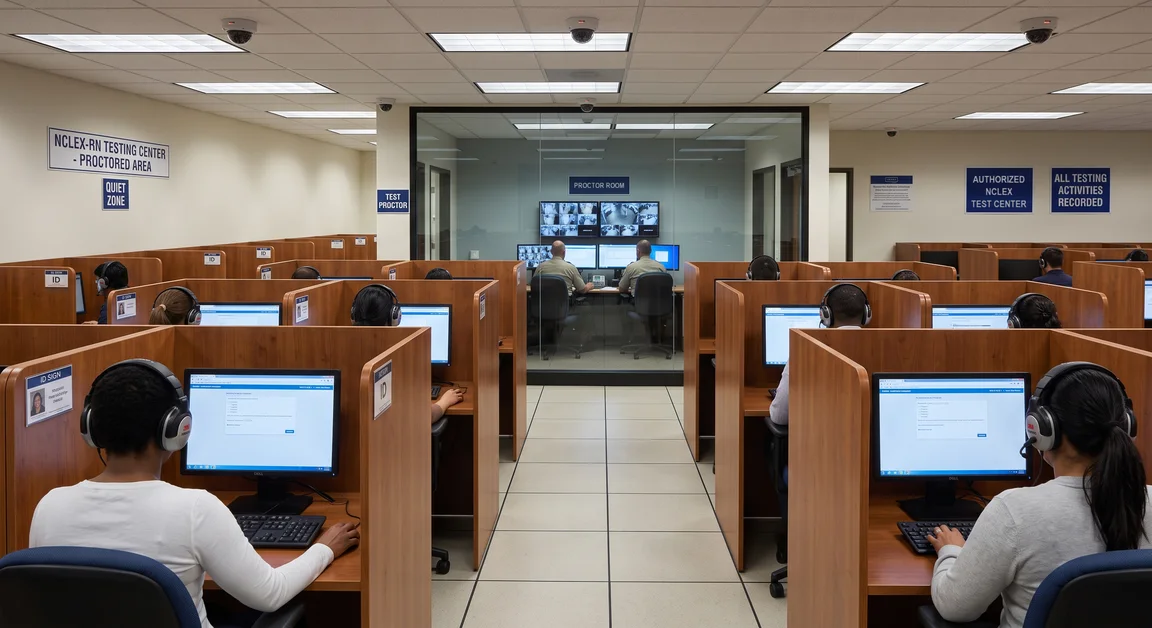
    NCLEX candidates testing in tall private carrels with a glass-walled proctor room

    A computer testing center, where the NGN is administered

    The Clinical Judgment Measurement Model

    Every NGN case study follows the same six-step cognitive sequence, whether or not the candidate notices it:

    1. Recognize Cues – separate normal from abnormal in the chart, vitals, and labs.
    2. Analyze Cues – connect the abnormal findings to a likely cause.
    3. Prioritize Hypotheses – decide which problem is the most urgent threat to life.
    4. Generate Solutions – identify the interventions that would address it.
    5. Take Action – choose what to do first, and how.
    6. Evaluate Outcomes – decide whether the intervention worked.

    A six-question unfolding case study usually walks through these six steps in order. Knowing the sequence in advance makes it easier to recognize what each question is actually testing, rather than treating every question as a fresh guess.

    Unfolding case studies

    Every NGN candidate encounters exactly three unfolding case studies during the exam, regardless of whether the test ends at the minimum 85 questions or runs to the maximum 150. Each case study is six connected questions, for 18 questions total.

    The screen splits in two. The left side holds a tabbed electronic health record — nurses’ notes, vital signs trends, lab results, provider orders, and history and physical. The right side holds the question. Answering it means reading the left side, not just the question stem.

    The word “unfolding” describes what happens between questions: time passes, and the chart updates. A case that opens with an 8:00 AM emergency department arrival might show a 10:30 AM inpatient chart with new orders by question four. Missing an updated lab value or vital sign between questions is one of the most common ways candidates get later items wrong — not because they misunderstood the medicine, but because they were still working from an outdated version of the patient.

    Bowtie items

    The bowtie question format is unfamiliar to most candidates the first time they see it. A single condition sits in the center. Two action boxes sit on the left, two monitoring-parameter boxes sit on the right.

    The most common mistake is starting on the left — picking actions before settling on what is actually happening to the patient. The condition in the center has to be locked in first: if the wrong condition goes in the center box, every choice on both wings is wrong even if the actions and parameters would have been correct for a different diagnosis.

    A useful check before submitting an answer: read the choices left to right as one sentence. “Because the patient has [condition], I will [action] and [action], and I will monitor [parameter] and [parameter].” If that sentence holds together clinically, the answer is probably right.

    Hand writing study notes on paper beside a laptop

    Working through a bowtie item on paper before answering

    Partial-credit scoring

    The old NCLEX scored select-all-that-apply questions as all-or-nothing: miss one correct option, or add one wrong one, and the whole question scored zero. NGN case study items use partial-credit scoring instead — each correct selection earns a point, and each incorrect selection subtracts one, down to a floor of zero.

    The trap inside that system is worth knowing before test day: correctly identifying two out of three right answers earns two points, but adding two uncertain guesses on top of those two correct answers can bring the score back down to zero. The safest strategy under partial-credit scoring is picking only what is genuinely certain and leaving uncertain options unselected, rather than reasoning “it might be right, so I’ll add it just in case.”

    What the length of the exam actually means

    The exam can end anywhere between 85 and 150 questions, and neither extreme is a bad sign on its own. The computer-adaptive algorithm keeps giving harder questions as long as a candidate’s ability estimate is unclear, and it keeps giving questions past the minimum specifically when it hasn’t yet been able to confirm a pass or a fail. Reaching question 150 does not mean failing — a large share of people who pass do so only after the full 150 questions.

    The related feeling worth expecting: most candidates leave the testing center certain they failed, because the algorithm pushes every candidate to roughly the edge of what they know. Feeling like every other question was a guess is closer to the normal experience of passing than a reliable sign of failing.

    Sources

    National Council of State Boards of Nursing (NCSBN) – Next Generation NCLEX Test Plan and NCJMM Framework
    NCSBN – Clinical Judgment Measurement Model Research
    Pearson VUE – NCLEX Candidate Bulletin

    Disclaimer: This article is a study guide for nursing students and candidates, for general informational purposes only. It is not exam prep counseling or medical advice, and is not affiliated with or endorsed by the NCLEX® or NCSBN®. Always verify current test plan details against official NCSBN materials.

  • What is the NCLEX-RN? Complete Beginner’s Guide

    What is the NCLEX-RN? Complete Beginner’s Guide

    This article is an educational guide for nursing students and candidates preparing for the NCLEX-RN examination. It is intended for general informational purposes only and does not constitute medical, clinical, or formal licensing advice.

    1. Definition and Purpose of the NCLEX-RN

    The NCLEX-RN (National Council Licensure Examination for Registered Nurses) is a standardized examination developed and administered by the National Council of State Boards of Nursing (NCSBN).

    Every Nursing Regulatory Body (NRB) and State Board of Nursing across the United States requires candidates to pass the NCLEX-RN to obtain a license to practice as a Registered Nurse.

    The primary purpose of the examination is public protection. The test evaluates whether an entry-level nurse possesses the minimum clinical judgment and competence necessary to provide safe, effective care to clients without causing harm. The exam is criterion-referenced and graded on a Pass/Fail basis.

    Nursing candidate preparing for the NCLEX-RN examination in a modern library

    Nursing candidate preparing for the NCLEX-RN exam

    2. The Computerized Adaptive Testing (CAT) System and 3 Exit Rules

    The NCLEX-RN uses a Computerized Adaptive Testing (CAT) format. Unlike traditional static exams, CAT dynamically recalculates candidate ability after every response and selects items of appropriate difficulty.

    The testing engine stops when one of the following three exit rules is satisfied:

    • 95% Confidence Interval Rule: The exam ends when the computer is 95% statistically certain that the candidate ability is clearly above or below the passing standard.
    • Maximum-Length Exam Rule: If the 95% confidence interval is not reached, the candidate continues up to the maximum limit of 150 items. The final ability estimate at question 150 determines the pass/fail result.
    • Run-Out-of-Time Rule: If the 5-hour time limit expires and the candidate has completed at least the minimum 85 questions, the computer evaluates the final ability estimate based on the responses to all completed items to render a pass/fail determination.

    Official Computerized Adaptive Testing CBT examination center

    Authorized Pearson VUE Computerized Adaptive Testing (CAT) environment

    3. Examination Structure and Administration Specifications

    Examination Feature Official Specification
    Minimum Question Limit 85 Questions (70 scored items + 15 unscored pretest items)
    Maximum Question Limit 150 Questions (135 scored items + 15 unscored pretest items)
    Total Time Allowed Up to 5 Hours (300 minutes, including tutorial and breaks)
    Official Break Schedule 2 Optional Breaks (First at 2 hours, second at 3.5 hours)
    Testing Location Authorized Pearson VUE Professional Centers (Worldwide)
    Biometric Security Palm vein scan, digital photograph, and digital signature required
    Official Result Reporting Pass / Fail (Issued officially by the regulatory board)

    The 15 pretest questions are included to validate items for future testing pools. They are not identified to the candidate and do not impact the final score. Candidates should answer all items with equal diligence.

    4. Next Generation NCLEX (NGN) Clinical Judgment Measurement Model

    The Next Generation NCLEX measures clinical judgment using the NCSBN Clinical Judgment Measurement Model (NCJMM). Candidates analyze client electronic health records (EHR) across six cognitive steps:

    • Recognize Cues: Identify relevant and abnormal clinical data from client charts, vital signs, and laboratory values.
    • Analyze Cues: Connect clinical findings to client pathophysiological conditions.
    • Prioritize Hypotheses: Identify the most urgent clinical risks and potential diagnoses.
    • Generate Solutions: Establish evidence-based nursing care priorities and interventions.
    • Take Action: Implement safe nursing protocols, medication administration, and client care.
    • Evaluate Outcomes: Re-assess client physiological responses and compare against expected outcomes.

    Standard Next Generation Item Types

    • Extended Multiple Response: Select-all-that-apply questions with partial credit scoring.
    • Cloze (Drop-Down): Progress notes containing embedded drop-down menus to complete clinical statements.
    • Extended Drag and Drop: Pairing clinical findings directly with appropriate interventions.
    • Matrix / Grid: Selecting responses across rows and columns to categorize findings and priorities.
    • Highlight Text: Directly selecting abnormal phrases within progress notes and diagnostic reports.

    5. Test Plan Content Distribution (Client Needs Categories)

    Safe and Effective Care Environment

    • Management of Care (15% – 21%): Prioritization, delegation to LPN/VN and UAP, client rights, advance directives, informed consent, confidentiality (HIPAA), and advocacy.
    • Safety and Infection Prevention and Control (10% – 16%): Standard and transmission-based precautions (airborne, droplet, contact), surgical asepsis, accident prevention, hazardous materials handling, and medication error prevention.

    Health Promotion and Maintenance (6% – 12%)

    • Antepartum, intrapartum, and postpartum care, newborn assessment, human developmental stages, immunization schedules, and health screening techniques.

    Psychosocial Integrity (6% – 12%)

    • Therapeutic communication, coping mechanisms, mental health disorders, behavioral interventions, substance use disorders, and crisis management.

    Physiological Integrity

    • Basic Care and Comfort (6% – 12%): Nutrition, elimination, non-pharmacological comfort interventions, mobility, and skin integrity.
    • Pharmacological and Parenteral Therapies (13% – 19%): High-alert medications, dosage calculations, IV therapies, adverse reactions, contraindications, and therapeutic monitoring.
    • Reduction of Risk Potential (9% – 15%): Diagnostic testing, laboratory value interpretation, pre- and post-procedure care, and vital sign monitoring.
    • Physiological Adaptation (11% – 17%): Emergency care, fluid and electrolyte management, acid-base imbalances, and pathophysiology of acute and chronic conditions.

    6. Official Registration and Scheduling Roadmap

    • Step 1: Submit Licensure Application to Your Nursing Regulatory Body (NRB). Apply directly to the state board of nursing where you seek licensure and fulfill all education and background verification requirements.
    • Step 2: Register with Pearson VUE and Pay Fees. Create an official Pearson VUE account and pay the $200 USD examination registration fee (international testing surcharges apply outside the U.S.).
    • Step 3: Receive Your Authorization to Test (ATT). Once the regulatory board approves eligibility, Pearson VUE issues an Authorization to Test (ATT) email. The ATT validity period (typically 90 days) cannot be extended under any circumstances.
    • Step 4: Schedule the Examination Appointment. Log in to Pearson VUE using your ATT details to select your preferred authorized testing center, date, and appointment time.

    Official NCLEX exam day essentials and preparation checklist

    Exam day identification and appointment confirmation essentials

    7. Test Day Procedures and Security Protocols

    • Arrival and Identification: Candidates must arrive at least 30 minutes prior to appointment time with a valid, government-issued identification showing an exact name match.
    • Biometric Screening: Mandatory palm vein scans, digital photographs, and electronic signatures are recorded upon check-in and each time a candidate re-enters the testing room from a break.
    • Security Regulations: Hats, outerwear, personal electronics, and bags must remain in external lockers throughout the exam.
    • Result Verification: Official results are distributed exclusively by the Nursing Regulatory Body. Unofficial results may be accessed via the Pearson VUE Quick Results service two business days post-exam.

    8. Sources & Disclaimer

    Sources

    • National Council of State Boards of Nursing (NCSBN) – NCLEX-RN Test Plan and NCJMM Framework
    • NCSBN – NCLEX Candidate Bulletin Testing Policies and Security Guidelines
    • Pearson VUE – NCLEX Examination Candidate Rules and Biometric Verification Protocols

    Disclaimer: NCLEX®, NCLEX-RN®, and NCLEX-PN® are registered trademarks of the National Council of State Boards of Nursing, Inc. (NCSBN). NCLEX Study Hub is an independent educational website and is not affiliated with, sponsored by, or endorsed by NCSBN or Pearson VUE. All materials are unofficial study and reference resources.